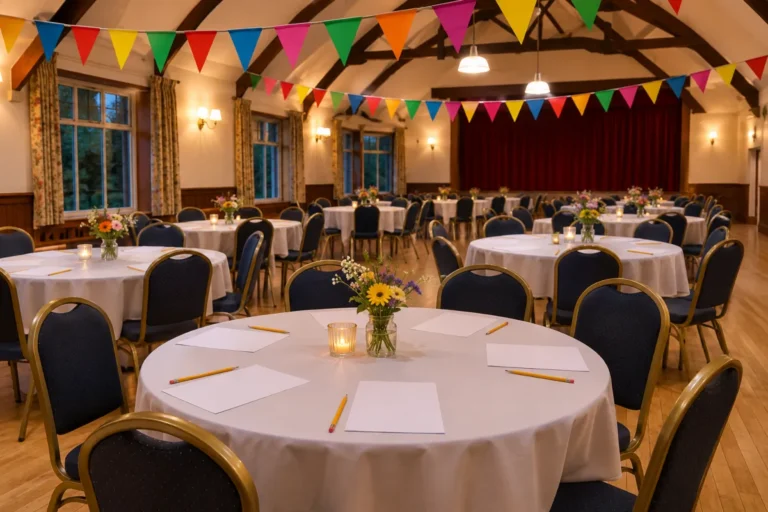
The short answer: the most useful group meetup safety tips are simple: check the group or host looks active and genuine, meet somewhere public, tell a friend where you’re going, keep personal details light, pace your drinking, don’t head somewhere private with people you’ve only just met, and make your own way home. Hosts can do a lot too: choose a busy venue, share the exact meeting point, set a few friendly rules, keep an eye on newcomers and step in early if anyone makes others uncomfortable. Group meetups are usually relaxed and lower-pressure than meeting one person alone; these habits keep them that way.
This guide is for anyone going to a walk, a games night, a supper club, a language exchange or a plan from an app with people they don’t know yet, and for the people hosting them. You’ll find before, during and after checklists for guests and hosts, a red-flag table, scripts to leave or to step in, and notes on group chats, alcohol, inclusion and getting home.
Why group meetups feel safer, and the limits
Meeting new people in a group has real advantages: you’re not alone with one stranger, there’s usually a host who knows the format, and if you don’t click with someone there are others to talk to. For many people, a group plan is the most comfortable first step.
But a group isn’t a guarantee. Large open events can include people nobody really knows, alcohol changes behaviour, and the end of the night (when people split off, swap numbers or suggest going on somewhere) is when most awkward situations happen. The tips below focus on those moments.
Group meetup safety tips for guests: before you go
- Check the group is real and active. Look for recent past events, photos or comments and a named host. A big member count alone means little.
- Read the event details: exact venue, start and end times, cost, and who it’s aimed at.
- Prefer public venues for a first meetup with a new group: pubs, cafés, parks, community halls. Our list of public places to meet someone for the first time applies to groups too.
- Tell a friend where you’re going, the group or host name, and roughly when you’ll be home. Sharing your location for the evening is a simple extra.
- Plan your way home: last train or bus, or the number of a taxi firm. Charge your phone and bring a little money.
- Decide your limits in advance: how long you’ll stay, how much you’ll drink, whether you’ll go on anywhere afterwards.
If you’re going alone and feeling nervous, our guide to going to a meetup alone covers arriving, joining in and leaving.

Guests: during the meetup
- Say hello to the host when you arrive. It means someone knows you’re there.
- Keep personal details light. First name, rough area and job type are fine; your address, workplace details and daily routine can wait.
- Watch your drink and pace yourself. Alternate with soft drinks if you like; nobody needs a reason.
- Stay with the group. If someone suggests splitting off somewhere quiet or private, it’s fine to say no.
- Trust your gut. If one person is making you uncomfortable, move to another part of the group, tell the host, or leave.
- Know the venue’s help. Staff can help you get a taxi or leave safely; many UK and Irish venues run Ask for Angela, where you can ask for “Angela” to get discreet help.
Guests: after the meetup
- Go home your own way. Don’t accept lifts from people you’ve just met, however friendly.
- Text your friend when you’re home, and stop sharing your location.
- Be thoughtful about contact details. Swap numbers or socials only with people you’re comfortable with.
- Report problems. Tell the organiser privately and use the app’s report tools if someone behaved badly.
Group meetups arranged through apps
More and more group plans are organised through friend apps, Meetup-style platforms and dinner-matching services. A few extra points apply:
- Keep conversations on the platform until you’ve met, so you’re not handing out your number to a whole group of strangers.
- Look at the host’s history where the app shows it: past events, reviews from attendees, how long they’ve been active.
- Be wary of last-minute changes that move the plan from a public venue to someone’s home or a car.
- Use block and report tools if anyone messages you inappropriately before or after the event, and tell the organiser.
- Treat money requests as a red flag. Legitimate group plans state costs up front; nobody should ask you to send money privately to “hold a place”.
Hosts: a group meetup safety checklist
Two weeks before
- Choose a busy, accessible public venue near transport. Avoid private homes for groups of people who haven’t met.
- Write a clear invite: exact place, times, cost, who it’s for.
- Decide a few simple group rules (see our meetup host playbook for templates).
The week of the meetup
- Share the exact meeting point and a way to reach you on the day.
- Remind people about privacy in group chats; in many messaging apps every member can see each other’s phone numbers. Our group chat etiquette guide has a pinned-message template.
- Ask a co-host to help, so there are two people keeping an eye on things.
On the day
- Arrive early, greet everyone, and introduce newcomers to someone.
- Keep an eye on people who seem isolated or uncomfortable.
- Step in early and calmly if someone is pushy, drunk or crossing lines.
- Know the venue’s staff and how they handle problems.
- At the end, make sure people have a way home, especially anyone who seems worse for wear.
Afterwards
- Follow up privately on any concerns that were raised.
- If someone made others uncomfortable, it’s fine to tell them they’re no longer welcome.
Inclusion is part of safety
People feel safer where they feel welcome. Choose step-free venues where you can, say in the invite whether the plan involves alcohol, offer alcohol-free options, and make it easy for people to ask questions privately. Some hosts run women-only or age-band plans; that’s a legitimate choice if it helps people feel comfortable, as long as it’s clear in the invite.

Red-flag table
| What you notice | Why it matters | What to do |
|---|---|---|
| Group has no recent events, no host, vague details | Could be inactive or not genuine | Skip it or ask the host questions first |
| Venue changes last minute to someone’s home | Removes the safety of a public place | Don’t go, or suggest a public alternative |
| Someone keeps steering you away from the group | Isolation from others | Stay with the group; tell the host |
| Pressure to drink, or drinks you didn’t order | Loss of control; spiking risk | Decline, keep your drink with you, tell staff |
| Persistent personal questions about where you live | Too much information too soon | Keep answers vague; move away |
| Someone ignores “no” or makes others uncomfortable | Disrespect for boundaries | Tell the host or staff; leave if needed |
| Offers of a lift home from someone you’ve just met | Your address stays private | “I’ve sorted my way home, thanks” |
Scripts to leave or step in
For guests
- Leaving: “I’m going to head off now. Thanks everyone, see you next time!”
- Declining a move: “I’ll pass on the next place, but this was great.”
- Declining a lift: “Thanks, but I’ve already sorted my way home.”
- To the host: “Can I have a quick word? Someone’s making me a bit uncomfortable.”
- To staff: “I need some help getting a taxi, please.”
For hosts
- Gently redirecting: “Let’s keep it friendly, folks.”
- A private word: “A couple of people have felt uncomfortable. Can you give them some space?”
- Ending it: “I think it’s time to call it a night for you. I’ll help you get a taxi.”
For a one-to-one that’s going wrong, our guide on how to leave a bad date politely covers the same escalation in more detail.
A note on alcohol
Many group meetups happen in pubs, and that’s fine. Alcohol does make it harder to read situations and to get home safely, so a few simple habits help: eat beforehand, alternate with soft drinks, keep your drink with you, and leave before you’re past your limit. Hosts can help by choosing venues with food and soft drinks and by not making drinking the main event.
Emergency numbers
- UK and Ireland: 999 or 112 in an emergency.
- Australia: 000 (112 also works from mobiles).
Our pillar on meeting someone from the internet safely covers before, during and after checklists for one-to-one meetings too.
Small plans, public places
Many of these safeguards are easier with small, clearly hosted plans. Full disclosure: we’re the team behind MeetNow, our own app. Plans happen at public places, the host picks who joins and can limit a plan by gender or age range, anyone can block another user, and after meeting both sides confirm “we met”, which builds a visible track record of who actually shows up. It doesn’t verify identities or run background checks, so the habits above still matter.
Want to turn this into an actual plan? MeetNow is a free app for meeting people in person: a host posts a plan at a public place, says who pays (host pays, split, pay your own or free) and picks who joins. It is live on the web now, starting in Malta, with the phone apps on the way: open MeetNow and see the plans near you.
FAQ
Are group meetups safer than one-to-one meetings?
They often feel lower-pressure, because you’re not alone with one person and there are other people around. The basics still matter: meet in a public place, tell a friend, keep your own way home and leave if anything feels off.
What are the most important group meetup safety tips?
Check the group or host looks active and genuine, meet somewhere public, tell a friend where you’re going, keep personal details light, pace your drinking, don’t go on somewhere private with people you’ve just met, and make your own way home.
What can a host do to keep a group meetup safe?
Choose a busy public venue, share the exact meeting point, set a few simple group rules, keep an eye on newcomers, step in early if someone makes others uncomfortable, and make sure people have a way home at the end.
Should I share my phone number in a meetup group chat?
Be aware that in many messaging apps, every member of a group can see your number. Use the platform’s own chat where possible, and only share personal contact details with people once you’ve met and feel comfortable.
What should I do if someone at a group meetup makes me uncomfortable?
Move away and join another part of the group, tell the host or venue staff, and leave if you want to. You don’t need to be polite. Report the person to the organiser and through the app afterwards.
Is it OK to leave a group meetup early?
Yes. A simple “I’m heading off, thanks everyone” is enough, and at big events a quiet exit with a thank-you message later is fine. Let anyone you came with know you’re leaving.
How do I get home safely after a group meetup?
Plan your route before you go, check the last train or bus, keep enough battery and money for a taxi you book yourself, and text a friend when you’re home. Don’t accept lifts from people you’ve just met.