The short answer: the best large group activities split a big crowd into small teams that each have something to do. A hosted quiz, a ceilidh or barn dance, a park day with lawn games, a team treasure hunt, a rounders match, a volunteering day or a hired room with game stations all work for 20 to 100 people. Choose one main activity, break everyone into pods of six to eight, keep each segment short and give the group a clear running order.
This guide is for organisers of bigger groups: clubs and societies, work socials, community groups, family reunions and meetups that have grown beyond a single table. You’ll find 30 ideas by setting, a table that matches activities to group size and budget, and the simple pod, station and roles method that stops a big event from turning into one loud huddle and a lot of people standing at the edges.
- 20 to 30 people: team quiz, treasure hunt, cooking class in teams, bowling with rotating lanes.
- 30 to 60 people: ceilidh, station games in a hired hall, rounders or softball, a sports day.
- 60 to 100 people: picnic festival with zones, charity fun run, big quiz with table teams, volunteering day split across sites.
The pod, station and roles method
Most large group activities fail for the same reason: everyone does one thing together, so the confident ten have a great time and everyone else watches. The fix is simple structure.
1. Pods
Split the group into pods of six to eight. That’s small enough that everyone talks and big enough that a quiet person can blend in. Mix pods deliberately: separate friends who arrived together, and spread out newcomers so every pod has a couple of regulars. Coloured wristbands, stickers or table numbers make it easy.
2. Stations or rounds
Give the event a shape. Either pods rotate between stations (ten to fifteen minutes each, with a whistle or a bell to move on), or everyone stays put while the host runs short rounds. Changing what happens every quarter of an hour keeps energy up without anyone noticing it’s being managed.
3. Roles
You can’t run 60 people alone. Before the day, ask for volunteers for a few clear jobs: a welcome person at the door, a timekeeper, a station lead for each activity and someone in charge of food and drink. Each pod can also nominate a captain who keeps their team together and answers the host. People who are nervous in big crowds often prefer having a job.
For the bigger picture of running regular events, our playbook on how to organise a meetup covers formats, timings and keeping regulars coming back.
Indoor large group activities
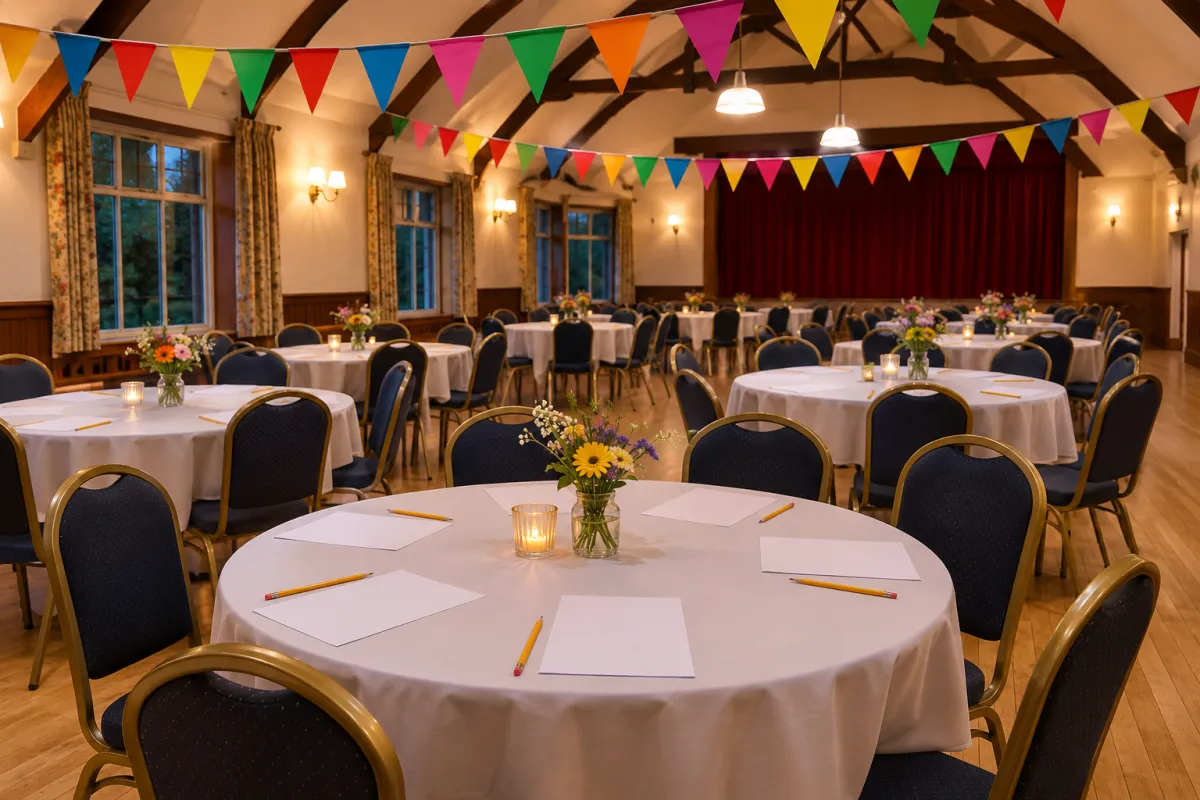
- A hosted quiz. Table teams of six, five rounds, a picture round on the tables and a tie-breaker. One of the easiest ways to entertain 30 to 100 people. Our pub quiz host playbook has ready-made rounds.
- A ceilidh or barn dance. A caller teaches every dance as you go, and the dances constantly swap partners, so it suits people who’ve never met. Hire a band with a caller and a hall with a good floor.
- Station games in a hired hall. Set up six stations (table tennis, giant Jenga, a puzzle table, a mini quiz, a drawing game, a guessing jar) and rotate pods every 12 minutes.
- Bowling with rotating lanes. Book several lanes and shuffle teams between games so everyone meets new people.
- A team cooking class. Many cookery schools run group sessions where each team makes one dish and everyone eats together at the end.
- A murder mystery evening. Give each pod a set of clues and run it as a competition between teams rather than relying on a few actors.
- Karaoke with team songs. Each pod chooses and performs one song together. Nobody has to sing alone.
- A games night with a league table. Several board games on several tables, short timed matches and a scoreboard on the wall. See our guide to hosting a board game night for game picks.
- A craft workshop. Wreath-making, pottery painting or printmaking at long tables. Calm, sociable and good for mixed ages.
- A talent or “skills swap” afternoon. Volunteers each run a 15-minute mini lesson (juggling, origami, a phrase in another language) and pods rotate between them.
Outdoor large group activities
- A picnic with zones. One area for food, one for lawn games (boules, Mölkky, frisbee, cricket), one quieter spot for people who’d rather sit and chat.
- Rounders or softball. Easy to learn, works with big teams and has plenty of time to talk while waiting to bat.
- A sports day. Egg and spoon, three-legged race, tug of war and a relay, with pods competing for a silly trophy.
- A team treasure hunt. Clues around a park or town centre, photo challenges and a finish point at a café or pub. Send teams off at staggered times.
- A group walk in waves. For big numbers, split into walking groups of 10 to 15 with a leader each, starting five minutes apart, all meeting at the same lunch spot.
- A beach or lake day. Volleyball, swimming where it’s safe and lifeguarded, and a shared barbecue. Popular in Australia and great in a British summer heatwave.
- An outdoor cinema night. Hire a screen or join a public screening, bring blankets and turn it into a picnic.
- A charity fun run or walk. Enter as a big team, wear matching T-shirts and finish with food together.
- A foraging or nature walk with a guide. Split into small groups per guide and swap findings at the end.
- A kayak or paddleboard session. Book an instructor-led group session; most centres split large groups into smaller lessons.

Free and low-cost ideas
Big groups don’t need big budgets. These cost little or nothing per person.
- parkrun and coffee. A free, timed 5k held on Saturday mornings in parks across the UK, Ireland and Australia. Walkers are welcome, and a big group taking over the café afterwards is part of the tradition.
- A community volunteering day. Beach cleans, park tidy-ups or a food bank shift, split across teams.
- A potluck in a park or community hall. Use a sign-up list so you don’t end up with 30 bags of crisps. Our potluck ideas for groups include a template.
- A free museum day. Many national museums in the UK and Ireland, such as the British Museum and the National Gallery of Ireland, are free to enter for their permanent collections. Split into small groups with a meeting time at the café.
- A games afternoon in the park with borrowed kit: footballs, frisbees, cards and a few boules sets.

Mixers for big groups who don’t know each other
When a large group is mostly strangers, start with five minutes of structure before the main activity. These scale well:
- Human bingo. Bingo cards with squares like “has lived abroad” or “can play an instrument”. Find a different person for each square.
- Line-ups. Ask everyone to line up by birthday month without talking, then chat with their neighbours.
- Speed-meeting rounds. Two lines facing each other, two minutes per pair, one prompt per round.
- Team naming. Each pod has three minutes to agree a team name and a reason for it. Instant bonding.
- The common-ground challenge. Pods race to find five things every member has in common.
For more short openers, our list of group ice breaker games is sorted by group size, and once everyone is seated at tables, our dinner party games for adults work just as well for table teams.
Match activities to size and budget
| Activity | Best size | Cost per person | Space needed |
|---|---|---|---|
| Hosted quiz | 20 to 100 | Low | Room with tables |
| Ceilidh | 30 to 100 | Medium (band and hall) | Hall with dance floor |
| Station games | 20 to 60 | Low | Hall or large room |
| Picnic with zones | 20 to 100+ | Very low | Park |
| Treasure hunt | 20 to 80 | Very low | Park or town centre |
| Cooking class | 20 to 40 | Medium to high | Cookery school |
| Volunteering day | 20 to 100 | Free | Partner organisation |
| Bowling | 20 to 50 | Medium | Bowling alley, several lanes |
Logistics checklist
The bigger the group, the more the small details matter. Work through this list a few weeks out.
- Book early. Halls, lanes and cookery schools fill up, especially in December and on summer weekends. Four to eight weeks ahead is sensible for 20 to 50 people; longer for bigger groups.
- Collect RSVPs with a deadline. Expect some drop-outs and plan numbers accordingly. Our tips on getting people to come to your event help with turnout.
- Be clear about money. Say the price, what it includes and who pays: everyone pays their own, an even split or the organiser or employer covers it. Collect deposits before booking anything non-refundable.
- Accessibility. Step-free access, seating for people who can’t stand for long, toilets nearby, dietary options and alcohol-free drinks.
- Sound. With more than about 30 people, a portable speaker and microphone saves your voice and keeps rounds moving.
- A running order. Arrival, mixer, main activity, food, results, finish. Share it with your volunteers.
- Weather plan. For outdoor events, have an indoor backup or a clear “if it rains” message ready.
- Safety basics. A first aid kit, a named first aider if you can, and a meeting point if people get separated. Our group meetup safety tips cover the essentials.
- Follow-up. Thank everyone the next day, share photos with consent and announce the next date while people are still talking about it.
Start with a small plan first
Many great big-group events begin as a handful of people at one table. If you’re building a community from scratch, it can be easier to run a few small plans first and grow from there. Our guide on how to start a social group walks through that path.
Full disclosure: MeetNow is our own app, and it is designed for those small starting plans: a host posts a plan at a real public place with a date, time and number of seats, says who pays (host pays, split, pay your own or free), and people ask to join with a short note. The host picks who comes and accepted guests get a group chat.
Want to turn this into an actual plan? Open MeetNow and see the plans in Malta: it is live on the web now, starting in Malta.
Frequently asked questions (FAQ)
What are good activities for large groups of adults?
A hosted quiz, a ceilidh or barn dance, a picnic with lawn games, a treasure hunt in teams, a rounders or softball match, a volunteering day or a hired room with game stations all work well for 20 or more people. The best ones split naturally into teams or tables.
How do you keep a large group engaged?
Split everyone into small pods of six to eight, give each pod a task, rotate them between stations or rounds, and keep every segment short. A clear running order and a host with a loud voice or microphone make a big difference.
What is the best free activity for a big group?
A park day with picnic food and lawn games, a group walk with a café stop, a community volunteering session or a parkrun followed by coffee all cost little or nothing for a large group.
How far ahead should you plan a large group activity?
Four to eight weeks for 20 to 50 people, and two to three months for bigger groups or anything that needs a venue booking, especially around Christmas and summer weekends.
How do you handle payment for a large group activity?
Set a clear price per person in the invite, collect money before the event if you are paying a venue deposit, and say exactly what is included. For pay-your-own plans, tell people which costs they cover themselves.