The short answer: meeting someone from the internet safely comes down to four habits. Meet in a busy public place, tell a friend who you are meeting and where, make your own way there and back, and leave the moment something feels off. Everything else in this guide (the video call, the red-flag table, the exit lines) is a way of making those four habits easy to follow when you are a bit nervous and want the meetup to go well.
This guide is for anyone about to meet a person they have only spoken to online: a possible new friend from a hobby group, someone from a local Facebook group or forum, a group meetup with people you have never seen in person, or a first date from an app. The risks and the habits are almost identical across all of them, so we treat them equally. Use the checklists before, during and after, and skip whatever does not fit your situation.
Is it safe to meet people from apps and online groups?
Most first meetups are uneventful: two or more people have a coffee, chat for an hour and go home. That is worth saying because fear makes people either cancel plans they would have enjoyed or skip precautions because they feel “paranoid”. Neither helps. A sensible plan lets you relax and actually enjoy meeting someone new.
Police services in the UK and Australia give the same basic advice. Victoria Police’s page on safety tips when meeting someone from online recommends planning ahead for any first meeting with a stranger, whatever the reason for meeting, choosing a location with lots of people around, meeting in daylight and sharing your location with friends. Guidance from the UK’s National Crime Agency, produced with Get Safe Online, says to meet somewhere public and stay somewhere public, make your own way there and back, and not feel pressured to go home with your date. None of that is complicated. The point is to decide it in advance, so you are not making safety decisions on the spot.
The same rules apply whether the person is a potential date, a potential friend or the organiser of a group walk. Platonic meetups sometimes feel “lower stakes”, so people skip the basics, but a stranger is a stranger until you have met them a few times.
Before you meet: the safe first meetup checklist
Most of the useful safety work happens before you leave the house. Run through this list a day or two ahead.
1. Check they are who they say they are
- Does their story hang together? Name, job, area, photos and the way they talk about their life should be broadly consistent over a few conversations.
- Run a reverse image search on one or two of their photos (Google Lens or TinEye both do this). If the pictures belong to someone else, stop there.
- Look for a normal footprint. A real person usually has some trace online: a public profile, a mutual friend, a club or workplace mention. Not everyone does, but a complete blank plus reluctance to share anything is worth noticing.
- Ask for a short video call. Five minutes is enough. It confirms they are the person in the photos and gives you a sense of how they talk. Someone genuine rarely minds; repeated excuses are a signal.
2. Keep the chat where it started (for now)
Stay on the app, group or platform where you met until you have met in person. Platforms usually have reporting and blocking tools, and your messages stay in one place. Australia’s eSafety Commissioner also suggests saving or screenshotting your conversations before meeting, because some apps delete the chat history when someone unmatches or blocks you. If you do move to messaging, a separate number or app username keeps your personal mobile number private until you are ready.
3. Pick a busy public place you know
Good first-meetup places are busy, easy to leave and familiar to you:
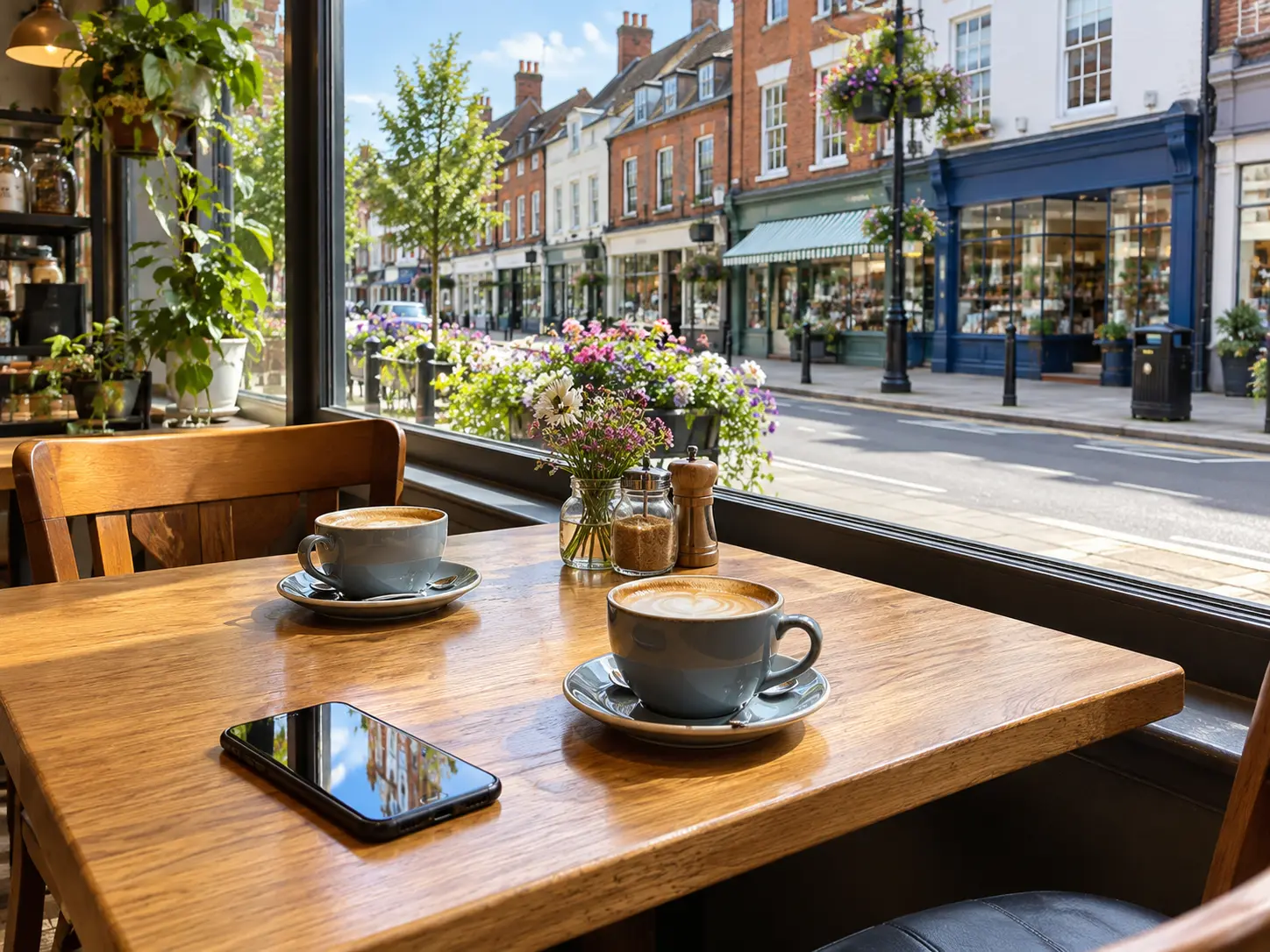
- A café on a high street or in a shopping centre, especially one you have been to before.
- A pub or bar at an early hour, sitting where staff can see you.
- A daytime walk on a popular route: a city park, a seafront promenade, a canal towpath with other people on it.
- An activity with other people around: a gallery, a museum café, a board-game café, a market.
Avoid anywhere private or remote for a first meetup: their home, your home, a car, a quiet beach or a trail with nobody on it. If they suggest a different venue at the last minute, it is fine to say “I’d rather keep to the original place” and stick to it.
4. Keep the first meeting short, and early if you can
An hour or so for coffee, a walk or one drink is plenty. Daylight helps, as Victoria Police notes. A short first meeting also takes the pressure off both of you: if it goes well, you plan a second one.
5. Tell a friend the details
Tell one trusted person:
- the name the other person is using, and a screenshot of their profile or photo;
- where you are going and roughly how long you plan to stay;
- a check-in time (“If I haven’t texted by 8, ring me”);
- what you want them to do if you don’t check in (ring you, then ring the venue, then call the police if they can’t reach you).
6. Share your location
Most phones make this easy. On an iPhone, the Find My app lets you share your location with a contact for a set time or indefinitely. Google Maps has a location-sharing option in the menu under your profile picture. WhatsApp lets you send a live location in a chat for a limited period. Turn it on before you leave and turn it off afterwards.
7. Sort your own way home
Plan how you will get there and back without relying on the other person: your own car, public transport, a taxi you book yourself, or a friend on standby. Check the last train or bus if you are meeting in the evening, and keep your phone charged (a small power bank in your bag is cheap insurance).
8. Keep personal details back for now
You do not need to share your home address, your workplace, your daily routine or your surname before you have met. Meet somewhere that is not on your doorstep if you prefer, and do not let them pick you up from home.

During the meetup: stay present, stay in control
Once you are there, the goal is to enjoy yourself while keeping a few quiet habits running in the background.
- Arrive on time or a few minutes early so you can pick a seat where you are comfortable, ideally with a view of the door and near other people.
- Drink at your own pace. Alcohol is part of plenty of first meetups in the UK, Ireland and Australia, and that is fine, but stay well within your limit. Alternating with water or a soft drink is perfectly normal.
- Watch your drink. Order it yourself, watch it being poured, keep it with you, and get a fresh one if you have left it unattended. If you suddenly feel much drunker than you should, or very unwell, tell bar staff straight away and get help.
- Send your check-in text at the time you agreed. Something as simple as “All good, call you later” works.
- Trust your gut. If something feels wrong (they are pushing for more alcohol, getting annoyed when you say no, or steering you somewhere quieter), you do not need proof. You can leave.
- Stay in public. If the meetup is going well and someone suggests “carrying on at mine”, you can say you’d rather keep it to a second meetup. Someone worth seeing again will be fine with that.
Many UK bars and pubs take part in the Ask for Angela scheme, where you can ask staff for “Angela” and they will help you leave discreetly. It only works in participating venues, so look for the posters (often in the toilets or by the bar) rather than assuming every pub knows it.
Red flags when meeting someone from online
One odd moment does not make someone dangerous; people are awkward when they are nervous. Patterns matter more than single moments. Use this table to sort “a bit awkward” from “time to step back”.
| Red flag | Why it matters | What to do |
|---|---|---|
| Pushes to move off the app or group very quickly | You lose the platform’s reporting tools and records | Stay on-platform until you have met; say so calmly |
| Refuses or keeps dodging a quick video call | A common sign the photos or story are not real | Make a short call a condition of meeting |
| Asks for money, gift cards or “help” with a problem | The classic pattern of a romance or friendship scam | Never send money; report the profile to the platform |
| Wants to meet somewhere private or remote first | Removes the safety of other people around you | Insist on a busy public place or don’t meet |
| Changes the venue or time at the last minute | Can be harmless, but it upsets your safety plan | Keep the original plan or rearrange for another day |
| Keeps asking for your address, workplace or routine | You don’t need to share these before meeting | Deflect politely; if they persist, end contact |
| Offers to pick you up or drive you home | Puts your journey in their hands | “Thanks, I’ve got my own way there and back” |
| Gets angry or sulks when you set a boundary | How someone handles “no” early on matters | Take it seriously; it is fine to stop talking |
| Story keeps changing (job, age, location) | May be a fake profile, or simply dishonest | Ask directly; if answers don’t add up, step back |
| Pressures you to drink more or stay longer | Ignoring your pace is a boundary issue | Stick to your plan and leave when you said you would |
Scripts to leave a meetup early
You never owe anyone a full meetup. The NCA guidance puts it simply: don’t feel bad about cutting a date short if you’re not keen, and the same goes for a new-friend coffee. Having a line ready makes it far easier. Pick one that sounds like you:
- “It’s been nice to meet you, but I’m going to head off now. Take care.”
- “I’m going to call it there. I’ve got an early start tomorrow.”
- “I don’t think we’re quite a match, but thanks for coming out. I’ll get going.”
- “I’m not feeling great, so I’m going to go home. Thanks for the coffee.”
- For a group: “Lovely to meet you all, I’m going to slip off now.”
If you feel uneasy rather than just bored, you don’t need to be polite at all. Go to the bar or counter and tell a member of staff, ring your friend, or call the police. You can also ask staff to call you a taxi, and wait inside until it arrives.
Emergency numbers to save before you go
- UK: 999 or 112 in an emergency; 101 for non-emergency police.
- Ireland: 112 or 999 in an emergency.
- Australia: 000 (Triple Zero) in an emergency; 131 444 for non-urgent police assistance in most states and territories.

After the meetup: getting home and following up
- Go home your own way, as planned. If they offer a lift, a friendly “I’m sorted, thanks” is enough.
- Text your friend as soon as you’re home, then turn off location sharing if you set a time limit.
- Follow up only if you want to. A short message is plenty. If you don’t want to meet again, a kind, clear note is better than ghosting: “Thanks for meeting up. I don’t think we’re a match, but I hope you find what you’re looking for.”
- Block and report if needed. If someone becomes pushy, abusive or won’t take no for an answer, block them on the platform and report the profile. Keep screenshots.
- Report crimes. If something happened that frightened or hurt you, you can report it to the police (in the UK, on 101 or online; in Ireland, at your local Garda station; in Australia, on 131 444 in most states), even some time later. If you are in danger, call the emergency number.
Group meetups and new-friend meetups: what changes
Meeting a group from a Facebook group, a club or a hobby forum feels safer because there are more people, and it usually is. A few things are still worth doing:
- Check the organiser. A group with a history of past meetups, photos and regular members is a different prospect from a brand-new account inviting people to a private address.
- Stick to public venues. Pub quizzes, park runs, café meetups and board-game nights are all good. Be more careful with “come back to mine afterwards”.
- Don’t get separated by default. If the group drifts off, you don’t have to follow one person somewhere quieter.
- Same basics apply. Tell a friend, share your location, get home your own way.
For one-to-one new-friend meetups (someone you met in a group chat, a neighbour from a local forum, a friend of a friend you haven’t met), use exactly the same checklist as a date. Platonic intent doesn’t change the safety basics, and nobody reasonable will be offended by “let’s meet at the café on the high street”.
Meeting someone new safely as a woman
Many readers of this site are women who want to meet new friends or dates without feeling on edge. The checklist above is the backbone, and a few extra habits can help you relax:
- Choose venues where you know the layout and feel at home.
- Sit where you can see the room, near staff or other customers.
- Keep your bag and phone with you, not on the back of a chair.
- Have your exit line ready and your taxi app open if you need it.
- Trust the feeling. If something feels wrong, you do not need to explain it to anyone.
None of this is about assuming the worst of people. It is about giving yourself a plan, so the rest of your attention can go on the conversation.
How MeetNow fits a safer first meetup
Full disclosure: MeetNow is our own app, built by the team behind this site (see our disclosure page and more about who we are). It is built around plans rather than profiles, and a few of its basics line up with the habits above:
- Plans happen at real public places. A host posts a plan (dinner, drinks, a game, a concert) at a public venue, with a date, time and number of seats.
- The host chooses who joins. People ask to join with a short note, and the host picks who comes. Hosts can also limit who can join (for example by gender or age range), and anyone can block another user.
- Accepted guests get a group chat, so the details stay in one place.
- Both sides confirm “we met” afterwards, which builds each person’s visible track record of actually turning up.
It does not replace your own judgement. The checklist in this guide still applies to every meetup, whatever app or group it comes from.

Printable checklist: meeting someone from the internet safely
Before
- Photos and story check out; reverse image search done
- Short video call done
- Chat saved or screenshotted
- Busy public venue chosen (one you know)
- Short first meetup, daylight or early evening
- Friend told: name, photo, place, time, check-in time
- Location sharing on
- Own way there and back sorted; phone charged
During
- Seat near people and staff
- Drink at your own pace; keep your drink with you
- Check-in text sent
- Exit line ready; leave if it feels wrong
After
- Home your own way
- “Home safe” text to your friend; location sharing off
- Follow up only if you want to; block and report if needed
Sources last checked October 2026.
FAQ
How do I meet someone from the internet safely?
Meet in a busy public place, tell a friend who you are meeting and where, share your location, make your own way there and back, keep the first meeting short and leave if anything feels wrong. A quick video call beforehand helps confirm they are who they say they are.
Is it safe to meet people from apps?
Most meetups from apps and online groups go without any problem, but you are still meeting a stranger. Using the platform’s own chat, meeting in public, telling a friend and arranging your own transport lower the risk considerably.
Should I video call someone before meeting in person?
Yes, if you can. A five-minute video call confirms the person matches their photos and gives you a feel for them. Someone who keeps refusing without a good reason is a reason to pause.
What are the best public places to meet someone for the first time?
Busy cafés, pubs at an early hour, popular parks or promenades in daylight, galleries, markets and board-game cafés. Pick somewhere you know, with staff and other people around, and easy transport home.
What should I tell a friend before meeting someone new?
The person’s name and photo, where you are meeting, what time, how long you expect to stay, a check-in time and what they should do if you don’t check in.
Should I share my address with a new friend?
Not before you have met a few times and feel you know them. Meet in public, make your own way there and back, and share your address, workplace or routine only when you are comfortable.
What should I do if a meetup makes me uncomfortable?
Leave. Use a simple exit line, or go to staff and ask for help or a taxi. In participating UK venues you can ask for “Angela”. If you are in danger, call 999 or 112 in the UK, 112 or 999 in Ireland, or 000 in Australia.