
Should you accept a ride from a first date? The answer most safety guidance gives is no. That applies to a lift to the date and a lift home afterwards. Turning down a kind offer can feel rude, especially when things went well. But a lift from someone you met a couple of hours ago hands over two things you want to keep: your home address and your freedom to leave whenever you choose.
This guide is for anyone meeting someone new in person for the first time. That could be a date from an app, a potential new friend, or a group you found online. It covers a before, during and after checklist, a red-flag table, and word-for-word scripts for declining a lift without any awkwardness. It also explains what to do if you are already in a car and it feels wrong.
None of this assumes the other person is dangerous. Most people who offer a lift are simply being considerate. The point is that a good first meeting should never depend on you testing that.
Should you accept a ride from a first date? The short answer
Police guidance is unusually direct on this point. South Australia Police tell people meeting an online match to always arrange your own transport to and from a first date and not rely on or let your date pick you up or drive you home
(South Australia Police). The advice comes from Australia, but the reasoning works just as well in Manchester, Galway or Brisbane.
A first meeting is when you know the least about someone. You may know their first name, a few photos and whatever they have told you in messages. That is enough for a coffee in a busy café. It is not enough to be alone in their car, on their route, with them deciding when the journey ends.
So the default is simple:
- Getting there: make your own way, and meet at the venue.
- Getting home: make your own way, by public transport, a booked taxi or a ride-share.
- In between: if you move on to a second venue, walk together or travel separately. Do not get into their car.
You do not have to explain any of this as a rule you follow because of them. It is just how you do first meetings, with everyone.

Why your own way home matters more than it seems
You can leave whenever you like
Having your own transport means the meeting ends when you decide it ends. If the conversation is dull, or something feels off, you can pay for your drink, say goodbye and go. If your lift home depends on the other person, leaving early means stranding yourself. Some people stay longer than they want just to avoid that, and that is the situation you are trying to avoid.
Your home address stays private
Dating safety guidance puts it plainly: On a first meeting, a stranger should not know your home address
(Bumble). A lift home hands your address over without you ever typing it into a message. Being picked up from home does the same. Even being dropped “just at the end of the road” tells someone roughly where you live. Once that information is shared, you cannot take it back if things go badly later.
You avoid the politeness trap
Accepting a lift can create a quiet sense of owing something: a longer goodbye, an invitation in, a second date you are not sure about. Most people would never expect that. But you do not want to be working out, in a moving car, whether this person is one of the few who might. Travelling separately keeps the evening even, and nobody owes anyone anything.
Trust your gut when meeting someone new
You will often hear that you should trust your gut when meeting someone new, and it is good advice. But instinct only protects you if you can act on it. A small uneasy feeling halfway through a drink is easy to act on when your train leaves in fifteen minutes. It is much harder when the only way home is the passenger seat beside the person causing the feeling. Your own transport is what turns a gut feeling into a decision you can actually carry out.
How MeetNow handles this: MeetNow, a free app coming soon to the App Store and Google Play, is built around plans rather than profiles. Every plan happens at a public place, so there is no “I’ll pick you up” stage: everyone makes their own way there. The host chooses who joins. Afterwards, both sides confirm “we met”, which builds a visible track record of who actually turns up.
Before the date: your transport checklist
Most of the work happens before you leave the house. Ten minutes of planning means you will never need to accept a lift you are unsure about.
- Plan your route there and back. Check the last train, tram or bus on your line, plus a backup option.
- Set up a ride-share or taxi app in advance, with a payment method saved, so booking takes seconds.
- Charge your phone fully and carry a small power bank if you have one.
- Choose a venue on your own transport line. Our list of public places to meet someone for the first time has busy, easy-to-reach options.
- Avoid venues you can only reach by car. Out-of-town spots make a lift feel like the only sensible choice.
- Tell a friend who, where and when. Send them your date’s name, profile and the venue. Our guide to sharing your location with a friend before a date walks through the settings step by step.
- Agree a check-in time with that friend, and what they should do if you go quiet.
- Keep your neighbourhood vague in messages. “North side” or “near the city centre” is plenty.
- Decide your answer to a lift offer now, so you are not making it up on the spot.
How to tell if someone is using a fake name
It is worth a quick check that the person you are meeting is who they say they are. Here are some simple ways to tell if someone is using a fake name:
- The name and photos do not match across platforms, or they have no online footprint at all.
- A reverse image search of their photos brings up a different name or a stock image site.
- They avoid giving a surname or change the subject when you ask.
- Details shift between messages: a different job, a different hometown, a different story about why they are single or new to the area.
- They keep putting off a short video call.
None of these proves anything on its own. Together, they are a reason to slow down. Our guide on how to know if someone is a catfish covers twelve checks in more detail.
Is it safe to meet people from apps?
People often ask whether it is safe to meet people from apps at all. For most people, most of the time, meeting someone from an app goes perfectly well. It goes even better when you stack a few simple habits: a public place, a friend who knows the plan, your own transport and a willingness to leave early. Declining a lift is one of the easiest of those habits, and it costs you almost nothing.
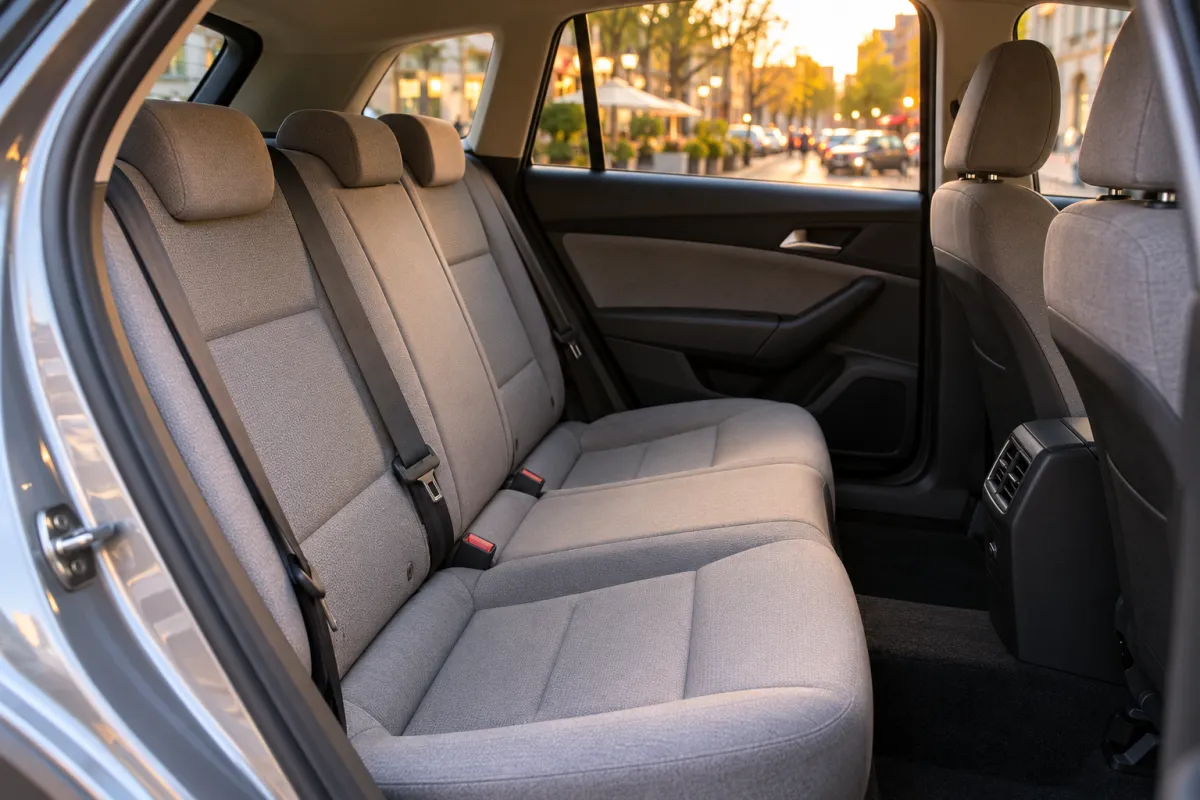
During the date: when they offer a lift
The offer usually comes near the end: “Where are you heading? I can drop you.” Sometimes it comes earlier, as an offer to pick you up. Either way, a short, warm, final answer works best. You do not need to justify it.
Scripts to decline a lift
- “That’s really kind, but I’ve already booked my ride.”
- “Thanks, I always make my own way on first meetups. Nothing personal, it’s just my rule.”
- “I’m fine, the station’s just round the corner. Shall we say goodbye here?”
- “No thanks, I like the walk to the bus. Let’s do this again though.”
- If they ask again: “I’m sure, thanks. Honestly, it’s no big deal.”
- If they push a third time: “I’ve said no, and I’d like you to leave it there.”
For the pickup at the start, keep it just as light: “No need, I’ll meet you there. I’m coming from somewhere else anyway.”
How they react tells you a lot
A respectful person hears “no thanks” and moves on: “Fair enough, get home safe.” That is a good sign. Someone who sulks, argues, or keeps finding new reasons why you should get in the car has shown you something useful about how they handle boundaries. You do not need to debate it. Thank them, book your ride and go. If you want to wrap up sooner than planned, our guide on how to leave a bad date politely has scripts and exit plans for every situation.
Waiting for your ride
If you have booked a taxi, wait inside the venue or somewhere busy and well lit. Your date does not need to wait with you. “You head off, my car is two minutes away” is a perfectly normal thing to say.
After the date: getting home safely
Booked transport is the safer option, and a few small habits make it safer still. South Australia Police advise: If using a taxi or ride-share vehicle, sit in the rear seat and ideally book via an app or phone so details are logged
(South Australia Police). They also suggest you take note of the vehicle’s registration plate or the driver’s ID, and consider sharing your live location or trip details with a trusted friend or family member
(South Australia Police).
Your after-date checklist:
- Book through an app or by phone, so the trip is recorded.
- Check that the registration plate and driver match the booking before you get in.
- Sit in the back seat.
- Share the trip or your live location with your friend.
- Keep your phone in your hand, not buried in a bag.
- Text your friend when you are home, even if the date was lovely.
- Tell your friend briefly how it went. A quick debrief helps you notice anything that felt off.
If you are taking public transport, sit near other passengers or the driver, and keep your friend updated at the main changes on your route.
Red flags around lifts and transport
Most lift offers are innocent. The ones below are worth noticing, especially in combination. For broader warning signs, see our guide to red flags on a first date.
| Red flag | What it can look like | What to do |
|---|---|---|
| Insists on picking you up from home | “It’s on my way, just send me your address.” | Decline and meet at the venue. If they keep pushing, rethink the date. |
| Fishing for your address | “Which street are you on? Just so I know the area.” | Stay vague. You can share more once trust has been built. |
| Pushing after you have said no | Asking three or four times, or calling you paranoid. | Give a firm final no, book your ride and leave. |
| Cancelling your plan for you | “Cancel your Uber, I’ll take you.” | Keep your booking. Your plan stands. |
| A detour suggestion | “Let’s swing by mine first, it’s on the way.” | Say no. Travel separately from that point on. |
| Annoyed that a friend knows | Irritation that you shared your location or told someone. | Treat it as a serious warning sign. Safe people do not mind. |
| Car-only venue | Suggesting somewhere remote that you can only reach by car. | Suggest a central, public alternative on your own transport line. |
| Identity does not add up | Name, photos or story keep shifting. | Pause the plan and ask for a video call first. |
If you are already in the car and it feels wrong
Sometimes plans change, or you accept a lift and then regret it. You can still end the journey. Police advice is clear: If you feel uncomfortable, unsafe, or suspicious about the route being taken, direct the driver to stop, exit the vehicle in a populated area, and seek assistance
(South Australia Police). The same applies whether the driver is your date or a taxi driver.
- Say it clearly: “Can you pull over here, please? I’m going to get out.”
- Choose a busy spot: a high street, a petrol station or a busy shop. Avoid quiet roads.
- Go somewhere with people: walk into a shop, café, station or hotel lobby.
- Call or message your friend and tell them where you are.
- Book your own ride from where you are now.
If you are in immediate danger, call emergency services straight away: 999 in the UK, 112 in Europe, which includes Ireland, or 000 in Australia (Northamptonshire Police).
If you are still at a pub or bar in the UK or Ireland and want discreet help before you leave, many venues take part in the Ask for Angela scheme. You ask staff for “Angela”, and trained staff can help you get away discreetly, for example by calling you a taxi. It is a UK and Ireland scheme and not every venue takes part, so do not rely on it elsewhere. Our guide to how Ask for Angela works explains the details.
When a lift might be fine later on
This is not a rule for ever. As you get to know someone, accepting a lift becomes a normal part of spending time together. There is no magic number of dates. The question is whether you now know enough to trust this person. Signs you might be there:
- You have met several times in public and felt comfortable throughout.
- Their name, job and story have stayed consistent, and you have checked them.
- You have had a video call, or met people who know them.
- They respected every “no” you gave, including the small ones.
- Your friends know who they are.
Even then, you can take it gradually. Get dropped at a station or a café near home before you share your exact address, and keep telling a friend when you are travelling with someone new.
Friend dates and group meetups: the same rule applies
Everything above applies when you are meeting a potential new friend or joining a group for the first time. At a walking group, a pub quiz team or a book club, someone often offers a lift as a genuinely kind gesture. The scripts still work: “Thanks, I’ve got my own way back, but see you next time.”
Groups do feel safer, because there are more people around. But a lift home is still just you and one person you barely know, and your address is still your address. Accept lifts from group members once you know them, not because the group itself feels friendly. If you are the host, make it easy for guests by choosing venues near public transport and never assuming people will drive.
Want to turn this into an actual plan? MeetNow is a free app for meeting people in person: a host posts a plan at a public place, says who pays (host pays, split, pay your own or free) and picks who joins. It is launching in Malta first and is not in the App Store or Google Play yet: join the MeetNow waitlist and we’ll email you when it launches near you.
Frequently asked questions
Is it rude to turn down a lift from a first date?
No. Making your own way to and from a first meeting is standard safety advice, and most people understand it. A warm, simple line such as “Thanks, but I’ve already booked my ride” is polite and final. Anyone who takes offence at that has told you something useful.
Should I let a first date pick me up from my house?
It is better not to. Safety guidance says a stranger should not know your home address on a first meeting, and a pickup gives it away. Meet at the venue instead, and share your address later, once you know and trust the person.
What if my date lives near me and suggests sharing a taxi?
Sharing a taxi still shows them roughly where you live, and whoever gets dropped first reveals their address. The simplest option is to book separate rides. If you do share part of the journey, get out at a busy public spot and continue on your own from there.
How can I tell if someone is using a fake name?
Look for names and photos that do not match across platforms, a reverse image search that turns up a different identity, reluctance to share a surname, and details that change between messages. Repeatedly avoiding a short video call is another warning sign. Any one of these is a reason to slow down before meeting.
Is it safe to meet people from apps?
For most people it goes well, especially when you combine simple habits: meet in a busy public place, tell a friend the plan and share your location, arrange your own transport both ways, and leave whenever you feel uncomfortable. Declining a lift is one of the easiest of those habits.
What should I do if a car journey starts to feel unsafe?
Ask the driver clearly to stop, get out in a busy, populated area and go somewhere with people, such as a shop or station. Contact a friend and book your own ride from there. If you are in immediate danger, call your local emergency number straight away.