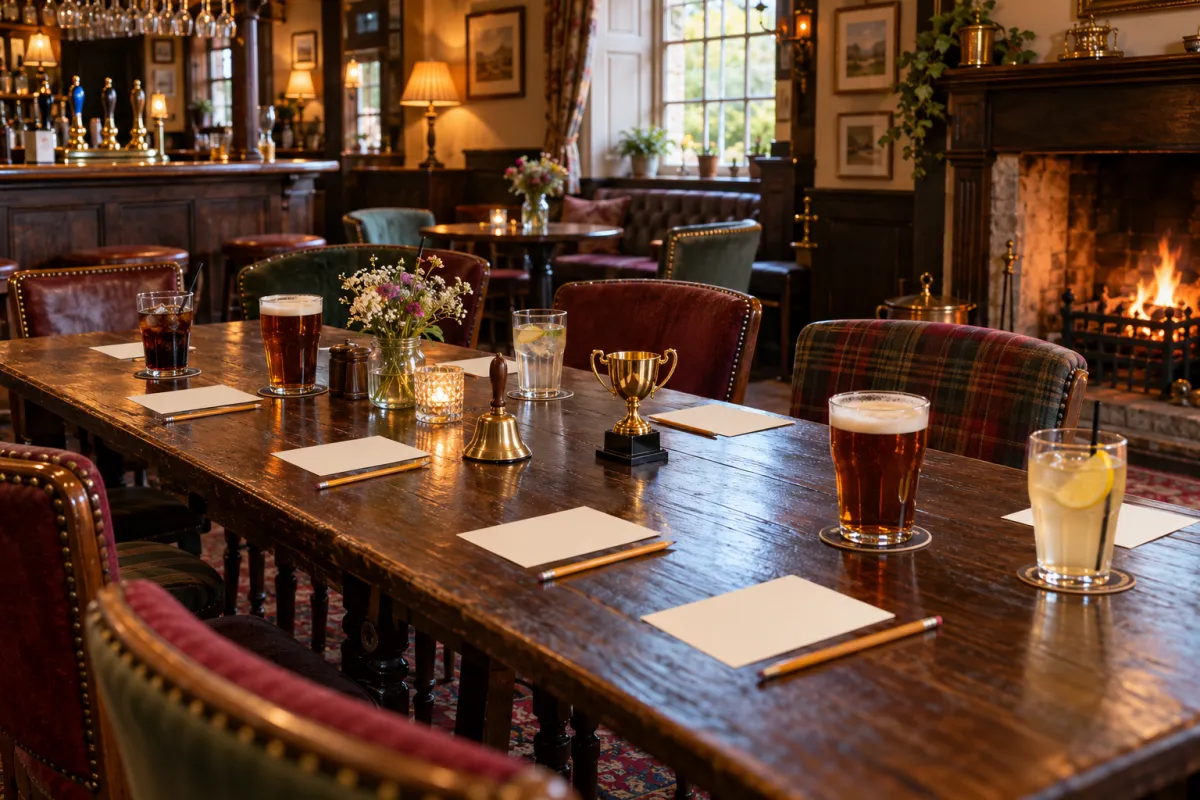
A pub quiz is one of the easiest ways to put strangers round the same table, because the questions do the talking for them. If you are working out how to host a pub quiz for a group of people who mostly don’t know each other, the format has already solved the hardest part of any first meetup: what on earth to say in the first ten minutes.
This playbook covers the whole job, from choosing a pub and writing rounds to mixing teams, sending reminders and following up afterwards. It works whether you run your own quiz in a booked back room or simply gather a team of newcomers for the quiz a local pub already hosts.
It is written for hosts who want everyone, including the person who arrives alone and a little nervous, to leave feeling they had a good time and got home safely.
Why a pub quiz works so well for strangers
Most first meetups quietly ask people to perform: be interesting, keep the conversation going, fill the silences. A quiz removes that pressure. Everyone faces the same direction for a few minutes, then turns back to their team with something concrete to discuss. Nobody has to think of a topic, because the question master hands them a fresh one every minute or two.
The format also has a built-in rhythm. Rounds create natural pauses for a drink, a toilet break or a quick chat with the next table. Scores give people something to cheer about together, and there is a clear finish, which matters more than many hosts realise. Guests who know roughly when something ends feel freer to come, and people who are shy or tired can leave after the final scores without anyone thinking it odd.
Finally, a pub is a public, staffed space. That makes it a sensible first meeting place for people who have only spoken in a group chat, and it means you, the host, are not responsible for a kitchen, a front door or anyone’s home address.
Ideal group size and team format
Team size shapes the whole experience. Too small and a team of strangers stalls the moment nobody knows an answer; too large and the quieter ones drift to the edges. Four to six per team is the sweet spot for most groups: enough combined knowledge to have a go at every round, small enough that everyone can hear each other over the pub.
| Total guests | Teams | What to plan for |
|---|---|---|
| 6 to 8 | Two teams of three or four | Very relaxed; you can host and play, or enter one team at an existing pub quiz |
| 10 to 16 | Three or four teams of four | The easiest size to run; one host can read questions and mark |
| 18 to 24 | Four to six teams | Recruit a co-host for marking and check you can be heard without shouting |
| 25 or more | Six teams or more | Ask the pub about a microphone and a separate room, or split into two groups |
If you have ever looked up the ideal group size for a dinner, you will know that a table of six to eight is roughly where one conversation can stay whole-table. A quiz works differently: the team is the conversation unit, so a quiz of twenty people can still feel intimate, as long as each table is a comfortable size. Joining an existing pub quiz instead? Ask the bar staff about the maximum team size before you invite anyone, because many quizzes cap it and you may need to enter two teams.
Choosing and booking the pub
Run your own quiz or join one
Running your own quiz gives you control over the questions, the pacing and the team mixing, but you need a space where your voice carries without disturbing other customers. Back rooms, function rooms and quieter weekend afternoons are ideal. Joining a quiz the pub already runs is far less work: the pub supplies the questions and a question master, and your job becomes welcoming people and forming teams. It is a good first step if you have never hosted before.
What to ask the pub
- Can we reserve a specific area, and how many people does it seat comfortably?
- Is there a minimum spend or deposit for the area? Ask rather than assume, and mention it in the invite if there is.
- Are you happy for us to run our own quiz, and can the background music be turned down during rounds?
- Do you serve food and a decent range of non-alcoholic drinks, and is there a cut-off for food orders?
- What time do we need to have the area cleared by?
What makes a good quiz pub
Look for somewhere central and easy to reach by public transport, with staff on the floor and enough light to read an answer sheet. Visit once beforehand if you can: sit where your group will sit, listen to the noise level and notice where the toilets and exits are. While you are there, check whether the pub displays Ask for Angela posters, which is a good sign that staff have thought about guest welfare (more on that in the safety section).
How to host a pub quiz for a group: the two-week timeline
Two weeks is enough time to fill seats without the date feeling so far away that people forget. Here is the whole plan at a glance, followed by the detail.
| When | Main jobs |
|---|---|
| Two weeks out | Choose the date and format, book the area, write and post the invite |
| One week out | Write the questions, open the group chat, share group rules, track confirmations |
| Two or three days out | Send the reminder, reconfirm with the pub, prepare answer sheets and team cards |
| The day itself | Arrive early, set up, welcome guests, mix teams, run the quiz |
| One or two days after | Thank everyone, share final scores, ask for feedback, announce the next date |
Two weeks out
Pick a date and a start time that suit the people you want to invite. Weekend afternoons are underrated: they suit early risers, people with family commitments and anyone who would rather be home at a sensible hour. Book the area, decide whether you are writing your own questions or joining the pub’s quiz, and write the invite (template below). Share it where your future guests already gather: a local community group, a workplace social channel, friends of friends. For more ways to fill seats, see these tactics for getting people to come to your event.
One week out
Write the questions now, while you still have time to double-check the answers. As people say yes, gather them in a group chat so they can say hello before meeting in person. Post the group rules early and keep the chat light: a welcome message, the plan and a fun warm-up question. Our guide to group chat etiquette for meetups covers how to keep it friendly without it turning into a constant buzz of notifications. Keep a running list of who has confirmed and who is on the reserve list.
Two or three days out
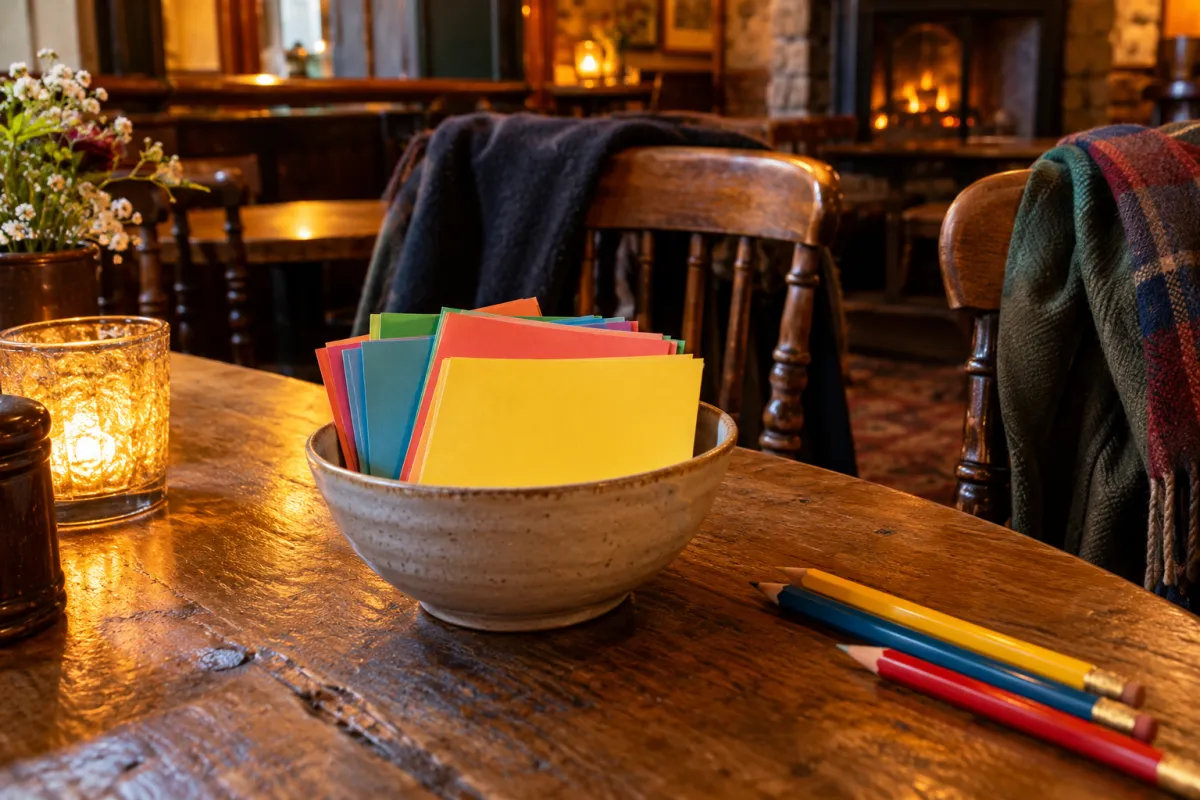
Send the reminder and ask people to reply if they can no longer come, so you can offer their seat to someone on the reserve list. Reconfirm the booking with the pub, print answer sheets (one per team per round, plus spares) and prepare a way to mix teams, such as coloured cards or numbered tokens. Pack pens. There are never enough pens.
On the day
Arrive at least half an hour early. Arrange the tables so teams can huddle but still see you, put something recognisable on your tables so guests can find you (a couple of balloons or a small flag works), and introduce yourself to the bar staff so they know who is running the group. Greet each arrival by name, seat them with someone friendly, and start on time or very close to it. Starting late punishes the people who made the effort to be punctual.
Running the quiz
- Explain the rules once, clearly: phones away, no shouting out answers, and your decision is final, though you are happy to hear a polite challenge.
- Read each question twice and leave a beat before moving on.
- Have teams swap sheets for marking: it gets people talking to other tables.
- Announce scores after every round or two to keep the energy up.
- Take a proper break at the halfway point so people can order, chat and mingle.
Follow-up
Within a day or two, post a thank-you in the group chat with the final scores, the answers to any disputed questions and the date of the next quiz if there is one. Only share photos if everyone in them has agreed. Ask one simple question: what would make next time better? Then let people leave the chat if they want to, without fuss.
Writing the quiz: rounds that work for mixed groups
A good quiz for strangers is not about proving who is cleverest. The aim is to give every team a few wins and every person a moment where their odd bit of knowledge saves the day. Keep rounds short, mix easy and hard questions within each one, and cover a broad spread so nobody’s specialist subject dominates.
| Round | Why it works with strangers | Host tip |
|---|---|---|
| General knowledge | Everyone can contribute something | Open with it to warm the room up |
| Picture round | Teams work on it between rounds, which sparks chatter | Hand it out at the start and collect it at the break |
| Music intros | Different ages and tastes get to shine | Play clips from a speaker only if the pub agrees |
| Local knowledge | Mixes long-time locals with newcomers | Works as well in a UK market town as in Dublin or a Brisbane suburb |
| Wordplay and anagrams | Rewards quick thinking rather than trivia memory | Keep them fair, with one clear answer each |
| Getting to know you | Doubles as an icebreaker | Collect harmless fun facts in advance, with permission, and ask which guest each belongs to |
| Tiebreaker | Ends things cleanly | Use a closest-answer question, such as the height of a famous landmark |
A few rules of thumb: check every answer against a reliable source, avoid questions that only one age group or background could know, and steer clear of anything that could embarrass someone, such as weight, relationships or money. If you want extra warm-up activities for the first few minutes, borrow from these icebreaker games for adults that aren’t cringe.
Mixing teams and welcoming newcomers
The most awkward moment at any group meetup is arrival. People who come with a friend cluster together; people who come alone hover near the bar pretending to read the menu. Your job is to close that gap quickly.
- Random draw: hand each guest a coloured card as they arrive; matching colours form a team. It feels fair, and nobody has to pick teammates.
- Split pairs gently: friends who arrive together can stay together, but put each pair with at least two people they don’t know.
- Seat solo arrivals first: place people who come alone next to a regular or a naturally chatty guest.
- Team names: give each team two minutes to agree on a name. It is a silly, low-stakes first decision that gets everyone talking.
When you introduce people, add a hook: “This is Priya, she’s just moved here and knows a frightening amount about films.” A hook gives the team its first topic before the first question is even read. The same welcome tactics work at any table-based meetup, and our board game night host playbook uses a very similar approach to seating newcomers.
Templates: invite, reminder and group rules
Copy these, change the details to match your plan, and keep the tone warm and simple.
Invite
Fancy a relaxed pub quiz with some new faces? I’m hosting a friendly quiz for people who’d like to meet others locally. No need to be a trivia genius: teams are mixed on arrival, so it’s ideal if you’re coming on your own.
When: Sunday afternoon, 3pm until about 5.30pm
Where: a pub in the town centre, back room booked (name and map link sent when you confirm)
Who: up to 16 people in four teams
Costs: the quiz is free; everyone buys their own drinks and food
Reply here to grab a seat. If it fills up, I’ll keep a reserve list.
Reminder
Hi all, a quick reminder about Sunday’s quiz! We start at 3pm in the back room, so aim to arrive ten minutes early to grab a drink and meet your team. Look for the table with the yellow balloons. If you can no longer make it, please reply here so I can offer your seat to someone on the reserve list. No pressure and no explanation needed. See you there!
Group rules
- Phones away during rounds. Searching for answers spoils it for everyone.
- Be kind to every team, including the one in last place.
- Drink whatever you like, alcoholic or not. Nobody is expected to buy rounds for people they’ve just met.
- Respect boundaries: no pushing for phone numbers, social handles or lifts home.
- Photos only with permission.
- Can’t make it? Tell the host as early as you can.
- If anything makes you uncomfortable, tell the host or the bar staff. You’re free to leave at any point.
Safety for hosts and guests
A pub quiz is about as low-key as meeting new people gets, but a few habits help everyone feel comfortable, especially guests meeting strangers for the first time. Share these basics in your group rules or the reminder:
- Public place only: keep the quiz, and any drink afterwards, in staffed public venues rather than moving on to someone’s home.
- Tell a friend: encourage guests to let someone they trust know where they’ll be and roughly when they expect to be home.
- Own way home: everyone arranges their own transport, and nobody should feel pressured into sharing a lift.
- Leave whenever you like: say out loud at the start that people are welcome to head off between rounds.
Know how Ask for Angela works
Many pubs support Ask for Angela, a discreet code phrase that signals to staff at licensed venues that someone feels unsafe, vulnerable or threatened and wants to get out of the situation they are in (Metropolitan Police). The Met explains that staff can offer to call a taxi, find a quiet or safe space, contact a friend or family member, or call security or the police if there is an immediate threat. Venues that support the scheme will often have posters displayed in their bathrooms (Police Service of Northern Ireland), so it is worth a look when you visit beforehand. Staff can also handle things discreetly by asking the person causing distress to leave the premises (Devon & Cornwall Police). In Australia, the NSW Government notes that the scheme originated in the United Kingdom in 2016 and already operates in many NSW venues through local liquor accords working with NSW Police Force (NSW Government). For a fuller explainer, read our guide to how Ask for Angela works in the UK, Ireland and Australia.
Your role as host
Hosts are not security, but you do set the tone. Introduce yourself to the bar staff so they know who is running the group. If a guest is making others uncomfortable, a quiet word is usually enough; if it isn’t, ask the staff for help rather than handling it alone. Never share anyone’s contact details or add them to chats without their agreement. For a complete checklist, see our group meetup safety tips for guests and hosts.
Handling no-shows and late drop-outs
Every free event loses a few people between “yes” and the day itself. Plan for it rather than taking it personally.
- Invite a few more people than your ideal number and keep a reserve list.
- Ask for a simple confirmation in the reminder; a written reply is a stronger commitment than a silent thumbs-up.
- Make dropping out easy and guilt-free. People who feel judged for cancelling tend to vanish instead of telling you.
- Form teams on arrival, not in advance, so absences never leave a team of one.
- If a booked area will look empty, ask the pub whether you can move to a smaller space; a full small table beats a half-empty big one.
Afterwards, don’t call out absentees in the group chat. A private “missed you, hope all’s well, the next quiz is next month if you fancy it” keeps the door open. If the same person no-shows repeatedly, it’s perfectly fair to stop holding a seat for them.
Turning one quiz into a regular group
If the first quiz goes well, the quickest way to build a community is consistency. A fixed slot, such as the first Sunday afternoon of every month, is easier to remember than a string of one-off dates. Invite regulars to write a round each, which spreads the work and gives people a reason to come back. Ask one or two of them to act as welcomers for newcomers, so the group never hardens into a closed clique.
Your quiz crowd can also become the springboard for other plans. Once people know each other, working out how to plan a group outing is much easier: a trip to a food festival, a comedy show or a Sunday roast already has a ready-made guest list. Outdoorsy members might ask how to start a hiking group, and a team that has bonded over trivia makes a natural first crew for a weekend walk. Keep every spin-off simple, public and clearly hosted, just like the quiz.
One last practical point: money. Agree how costs work before anyone arrives. The simplest default is that everyone buys their own drinks and food; if you are putting on prizes or the pub needs a deposit, say so in the invite. Splitting a shared tab is a topic in its own right, so keep your quiz to pay-your-own unless the group has agreed otherwise.
Want to turn this into an actual plan? MeetNow is a free app for meeting people in person: a host posts a plan at a public place, says who pays (host pays, split, pay your own or free) and picks who joins. It is launching in Malta first and is not in the App Store or Google Play yet: join the MeetNow waitlist and we’ll email you when it launches near you.
Pub quiz hosting FAQ
How many people do you need to host a pub quiz for a group?
You can run a fun quiz with as few as six to eight people split into two teams, but ten to sixteen is the easiest size for a first-time host: three or four teams of four, with one person reading questions and marking. Above about twenty, recruit a co-host and check the pub can give you a space where you can be heard.
How long should a pub quiz last?
For a group of strangers, aim for around two to two and a half hours including a halfway break. That usually means four to six rounds of eight to ten questions. Put the finish time in the invite so people who prefer shorter meetups can plan around it.
Do I need the pub’s permission to run my own quiz?
Yes, always ask first. Most pubs are happy to host a group that will be buying drinks and food, but they may want you in a particular area, ask for a minimum spend or deposit, or prefer you avoid clashing with their own quiz. A quick conversation when you book prevents awkwardness on the day.
What if someone comes alone and doesn’t know anyone?
Plan for it, because it will happen and it is a good sign. Greet them by name, seat them first with a friendly regular, and use a random team draw so nobody has to pick teammates. Introducing them with a small hook, such as a hobby or where they have moved from, gives the team an instant topic.
Should I add guests to a group chat before the quiz?
A group chat helps people say hello and makes the first meeting less daunting, but only add people who have confirmed and agreed to join it. Keep it to the plan, a welcome and a warm-up question, and let people leave afterwards without fuss.