A dinner for strangers depends on three decisions you make before anyone sits down: how many seats, which venue, and what the invite promises. If you get those right, the conversation mostly looks after itself. If you have been wondering how to host a dinner for strangers without it feeling like a job interview over starters, this playbook takes you from two weeks out to the follow-up message.
It is written for hosts in the UK, Ireland and Australia. You might be gathering people from a running club, a neighbourhood group chat, a new job or friends of friends. The templates are ready to copy and paste. Change the details and send.
One principle runs through all of it. Everyone at the table should feel they could leave at any point without awkwardness. Once guests know that, strangers relax and start talking.
Choose the right format
For a first dinner with strangers, a booked table at a restaurant, café or pub dining room is the sensible default. It is public and it has staff. It also has a natural end point, which is the bill, and nobody has to hand their home address to people they have never met. Stranger-dining services work on the same logic: Timeleft’s standard structure places 4 to 6 people together at a pre-vetted public restaurant rather than in someone’s home (Timeleft).
Keep home dinners for later, once the group has met at least once and people know each other’s names, faces and habits. Hosting at home for the first meeting also leaves you doing the cooking, the clearing up and the welcoming all at once, and that is hard work when you are also trying to get the conversation going.
Dinner is not your only option. A long weekend lunch or a relaxed brunch works just as well and suits people who prefer to be home early. Choose whichever time of day fits your group. What matters is a shared table, a fixed start time and an agreed end.
Ideal group size and who to invite
Group size shapes the whole evening more than the menu does. With too few people, one quiet guest drags the energy down. With too many, the table splits into separate conversations and newcomers drift to the edges.
| Group size | How it feels | Best for |
|---|---|---|
| 4 | Intimate, one conversation, little room to hide | Confident talkers or a shared niche interest |
| 5 to 6 | Lively but still one table-wide conversation | Most first dinners for strangers |
| 7 to 8 | Splits into two or three conversations | Hosts with a co-host anchoring the other end |
| 9 or more | Effectively two tables | Established groups, not a first meeting |
Who to put around the table
- A shared thread. Give people one thing in common: new to Dublin, training for a half marathon, keen on Sichuan food. The thread makes the first ten minutes easy.
- One or two anchors. Invite a friend who asks good questions and is happy to sit next to the quietest guest. If you have eight people, put your co-host at the far end.
- No lone outsider. Avoid a table of four people who already know each other plus two newcomers. Either most guests are new or everyone gets a buddy.
- A balanced mix. Think about whether one person will feel like the only one of anything at the table, whether that is age, gender or background, and adjust if you can.
If you are building a wider group from scratch, our guide on hosting a group dinner for people who don’t know each other goes deeper on mixing guests and keeping one conversation going.
How to host a dinner for strangers: the two-week timeline
Two weeks is enough lead time for most restaurant bookings, and it is short enough that people still remember they said yes. Here is the full schedule at a glance, followed by the detail.
| When | What to do | Done when |
|---|---|---|
| Two weeks out | Pick date, theme, venue shortlist and bill rule | Invite drafted |
| Ten days out | Send invites, collect replies and dietary needs | Numbers confirmed |
| One week out | Book the table and confirm the deposit and policies | Booking in your name |
| Three days out | Open the group chat and send the reminder | Everyone has replied |
| Day before | Reconfirm with the venue, plan seating, sort your journey home | Seating plan in your head |
| Day of | Arrive early, greet, introduce, order | Everyone seated and talking |
| Day after | Thank-you message, feedback, next date | Next dinner pencilled in |
Two weeks out
Decide the basics before you invite anyone. That means the date and start time, the rough area, a theme or shared thread, a price band (casual, mid-range or treat), and how the bill will work. Shortlist two or three venues in case your first choice is full. Draft the invite now so you are not writing it in a rush later.
Ten days out
Send the invite to slightly more people than you have seats, because some will decline. Ask each person to reply with a yes or no, any dietary needs, and one line about themselves. That single line gives you material for introductions and seating. Set a clear reply-by date.
One week out
Book the table once you have firm yeses. Book under your name and your own contact details. Note any deposit, set menu or cancellation terms so you can share them in the reminder.
Three days out
Open one group chat for everyone attending and post the reminder. Keep the chat for logistics: time, address, how to find the table, what happens if someone is running late. Our group chat etiquette rules for meetups cover how to stop the chat becoming noisy before anyone has met.
The day before
Call or message the venue to reconfirm numbers and any dietary needs. Sketch a rough seating plan in your head. Prepare two or three easy opening questions. Sort out how you will get home, and suggest that guests do the same.
The day of the dinner
Arrive ten to fifteen minutes early. Check that the table is right, take a seat where you can see the door, and order water for the table. Greet each person by name as they arrive, introduce them to whoever is already there with one detail (“Priya’s just moved from Leeds and runs with the Saturday group”), and show them where to sit.
Follow-up
The next day, send a short thank-you in the group chat. Ask one feedback question and float a possible next date. Leave it there. People who enjoyed it will reply, and nobody should feel chased.

Large group restaurant reservation tips
A good venue does a lot of the hosting for you. A loud, cramped or rushed one undoes all your preparation. These large group restaurant reservation tips apply whether you are booking for five or eight.
- Visit or call at the same time of week. A restaurant that is calm on a Monday lunchtime can be deafening on a Friday evening. Ask about noise if you cannot check in person.
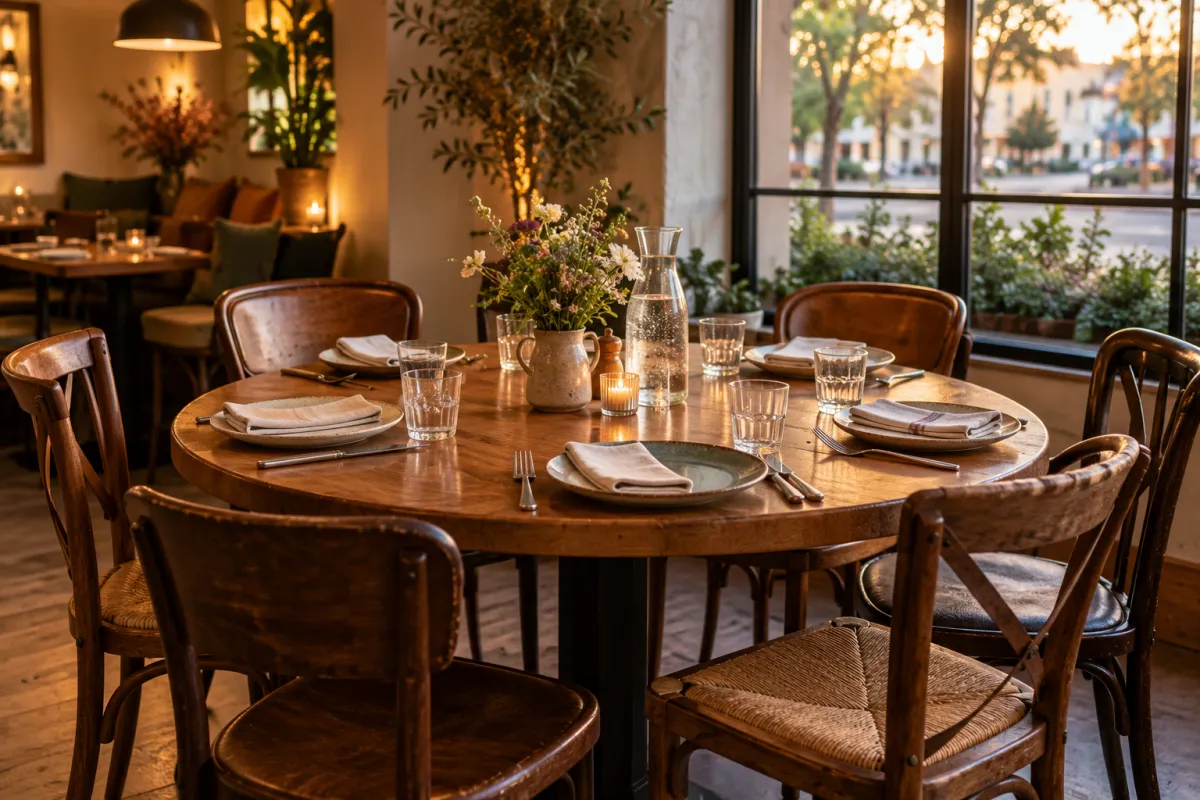
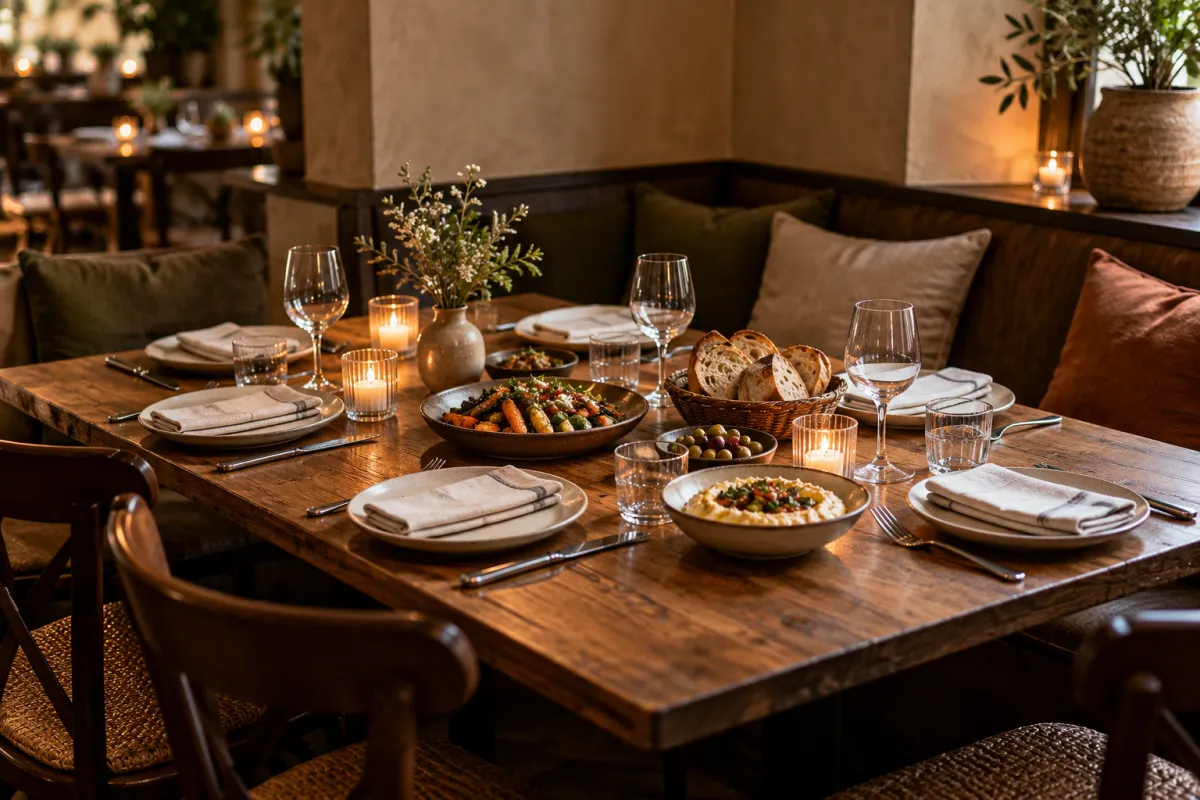
- Ask for the right table. Round or squarish tables keep one conversation going. Long banquet tables split groups in two. A corner or semi-private area beats the middle of the room.
- Ask about group policies up front. Many restaurants ask larger groups for a deposit, a set menu, a minimum spend or a service charge. Find out when you book and include it in your invite.
- Check the table time. Some venues give tables for a fixed slot. Knowing the limit tells you when to order and gives the dinner a natural end.
- Ask about separate bills. Some places split bills by seat and some will not. Knowing in advance saves an awkward few minutes at the end.
- Confirm dietary needs in writing. Send the list when you book and again when you reconfirm.
- Choose somewhere easy to reach. Good public transport links and well-lit streets help everyone get home on their own terms.
| Venue type | Works well for | Watch out for |
|---|---|---|
| Neighbourhood bistro or trattoria | Relaxed pace, sharing plates | Popular slots fill quickly |
| Pub dining room | Casual groups, mixed budgets | Noise if there is sport on |
| Café for brunch or lunch | Daytime meetups, lower spend | Shorter table times |
| Restaurant with a set menu | Themed supper clubs | Dietary flexibility |
For themed ideas that suit a restaurant booking, browse our supper club themes and host timeline.
Templates: invite, reminder and group rules
Clear messages prevent most problems before they start. Copy these, then change the details to your own.
Invite template
Hi! I’m hosting a small dinner for people who are new to the area (or just fancy meeting new people). It’ll be six of us at Luca’s on Station Road, Saturday at 7pm, finishing around 9:30.
Most of us won’t know each other, and that’s the point. It’s relaxed, with no speeches and no pressure to stay late.
Bill: everyone pays for what they order, and the restaurant can split by seat. Mains are in the mid-range.
If you’d like to come, reply by Wednesday with yes or no, any dietary needs, and one line about yourself so I can introduce you.
Reminder template
Hi all, a quick reminder for Saturday. We’re at Luca’s on Station Road at 7pm, and the table is booked under my name. I’ll be there from 6:45.
If you’re running late, drop a message here. We’ll order at 7:20 so the kitchen isn’t held up. If you can no longer make it, let me know by Friday midday so I can update the booking or offer your seat to someone else.
See you there!
Group rules template
Pin these in the group chat or add them to the end of the reminder. Keep them short and friendly.
- Logistics go in this chat. Please don’t message people privately unless they’ve invited it.
- We meet at the venue, not at anyone’s home.
- Arrive whenever suits you, but we order at the agreed time.
- Drink whatever you like, alcohol or not. Nobody keeps score.
- Leave whenever you need to. A quick goodbye is plenty.
- Ask before posting photos of anyone.
- If you can’t make it, let me know before the deadline so someone else can take your seat.
Thank-you template
Thanks so much for coming last night, it was lovely to meet you all. One quick question: would you prefer the next one as a lunch or a dinner? I’m thinking of about a month’s time. No need to reply if you’re not up for another.
Running the table: seating, icebreakers and pace
Seating
Sit in the middle rather than at the head, so you can reach the whole table. Put the quietest guest next to you or your anchor friend. Separate people who arrived together so that couples or pairs mix with everyone else. If someone seems uneasy, let them choose a seat near the end, where leaving is easy.
The opening round
Once everyone has a drink, run one quick round: name, how you heard about the dinner, and one easy question such as “best thing you’ve eaten this year” or “what you’d do with a free Saturday”. Keep it light and voluntary. Our list of icebreaker games for adults that aren’t cringe has more options, from table-wide questions to a gentle two-truths round.
Pace and flow
- Order early. Waiting for food kills momentum, and ordering together gives everyone something to talk about.
- Bridge conversations. If two ends of the table drift apart, pull a thread across: “Sam, you’d love this, Ellie’s just been to Hobart.”
- Rescue gently. If one person is dominating, ask someone else a direct question. If a topic turns sour, change the subject without fuss.
- Call the ending. When the bill comes, thank everyone and mention that a few of you might walk to a nearby café for dessert, with no pressure. Guests who want to go home get a clean exit.
The bill
Settle the bill rule in the invite and stick to it. Pay-your-own or an even split both work if everyone knew beforehand. Surprises at the end are what make the bill uncomfortable.
Managing no-shows and late arrivals
No-shows are part of hosting strangers. People who have never met you feel less obliged than friends do. You cannot remove the problem, but you can make it smaller.
- Use a firm reply-by date and a confirmation step. The reminder asks people to confirm, and anyone who doesn’t reply gets one friendly nudge.
- Keep a short waitlist. If someone drops out before the deadline, offer their seat straight away.
- Tell the venue early. Restaurants are far more forgiving when you update numbers before the day.
- Don’t wait to order. Start at the agreed time. It is fairer to the people who arrived.
- Don’t chase on the night. One message is enough. Afterwards, decide quietly whether to invite that person again.
Repeat no-shows are a signal, not a personal insult. For more ways to get firm yeses that actually turn up, see how to get people to come to your event.
Safety basics for hosts and guests
Most dinners with strangers are simply pleasant evenings. A few habits keep them that way for everyone, and they are worth building into the plan from the start.
- Public venue, always, for a first meeting. Share the restaurant’s name and address, never your home address.
- Tell a friend. The Suzy Lamplugh Trust advises agreeing to check in with a trusted contact before, during and after meeting someone new, with a plan for them to take action if you miss a check-in (Suzy Lamplugh Trust). Hosts should do this too.
- Own way home. Encourage everyone to plan their own journey. Don’t arrange lifts between people who have only just met.
- Leaving is normal. Your group rules already say so. If you feel uncomfortable, go, and the same applies to every guest.
- Group chat before private chat. Timeleft does not allow one-on-one private messaging before its dinners and opens only a group chat for table coordination (Timeleft). You can copy the spirit by keeping all pre-dinner contact in the group.
- Photos with care. The Suzy Lamplugh Trust recommends turning off geo-location tags on your phone and camera before sharing photos, because metadata can reveal where pictures were taken (Suzy Lamplugh Trust). Ask before posting anyone.
- Women-only tables are a valid choice. Some guests will be more comfortable at a women-only dinner, and Timeleft runs dedicated women-only dinners for that reason (Timeleft). You can host one too.
If someone crosses a line, have a quiet word, ask the staff for help if you need it, and leave them off future invites without debate. Our group meetup safety checklist for guests and hosts has the full list.
Variations: game nights and dinner clubs
How to host a game night for strangers
The same timeline works almost unchanged if you want to host a game night for strangers. Book a table at a board game café or a pub that welcomes games, keep the group to a size that suits one or two games, and pick titles that can be taught in a few minutes. Cooperative or party games break the ice faster than long strategy games. Our playbook on hosting a board game night includes game picks and a teaching script.
How to start a dinner club with friends of friends
If you want to start a dinner club with friends of friends, use the “bring one” model. Each regular brings one person they know whom the rest of the group doesn’t. Everyone has a buddy, and the circle grows steadily without strangers arriving cold. Rotate the choice of venue among regulars once the group settles, and keep the same group rules so newcomers always know what to expect. Keep it at a public venue until the core group knows each other well.
Want to turn this into an actual plan? MeetNow is a free app for meeting people in person: a host posts a plan at a public place, says who pays (host pays, split, pay your own or free) and picks who joins. It is live on the web and works in your browser, starting in Malta. The Android app is on Google Play; the iPhone app is not in the App Store yet. Open MeetNow and see the plans posted in Malta.
Frequently asked questions
How many people should I invite to a dinner for strangers?
Aim for five or six around the table for a first dinner. That is large enough that one quiet guest doesn’t stall the conversation and small enough to keep one table-wide chat going. Invite a few more than you have seats, because some people will decline.
Should I host a dinner for strangers at home?
Not for a first meeting. A public restaurant or café means nobody has to share a home address with people they haven’t met, staff are around, and the bill gives the evening a natural end. Home dinners work well later, once the group has met and everyone feels comfortable.
What if nobody talks at the start?
Run one short opening round once drinks are on the table: name, how you heard about the dinner and one easy question. Order food early so there is something shared to talk about, and seat yourself or a chatty friend next to the quietest guests.
How do I handle the bill with people I’ve just met?
Decide the rule before you invite anyone, whether that is pay your own or an even split, and put it in the invite. Ask the restaurant when you book whether they split bills by seat, so there are no surprises at the end.
What do I do if a guest makes others uncomfortable?
Redirect the conversation first and have a quiet word if it continues. Ask the venue staff for help if you need it. Afterwards, leave that person off future invites. Your group rules already make clear that anyone can leave whenever they need to.