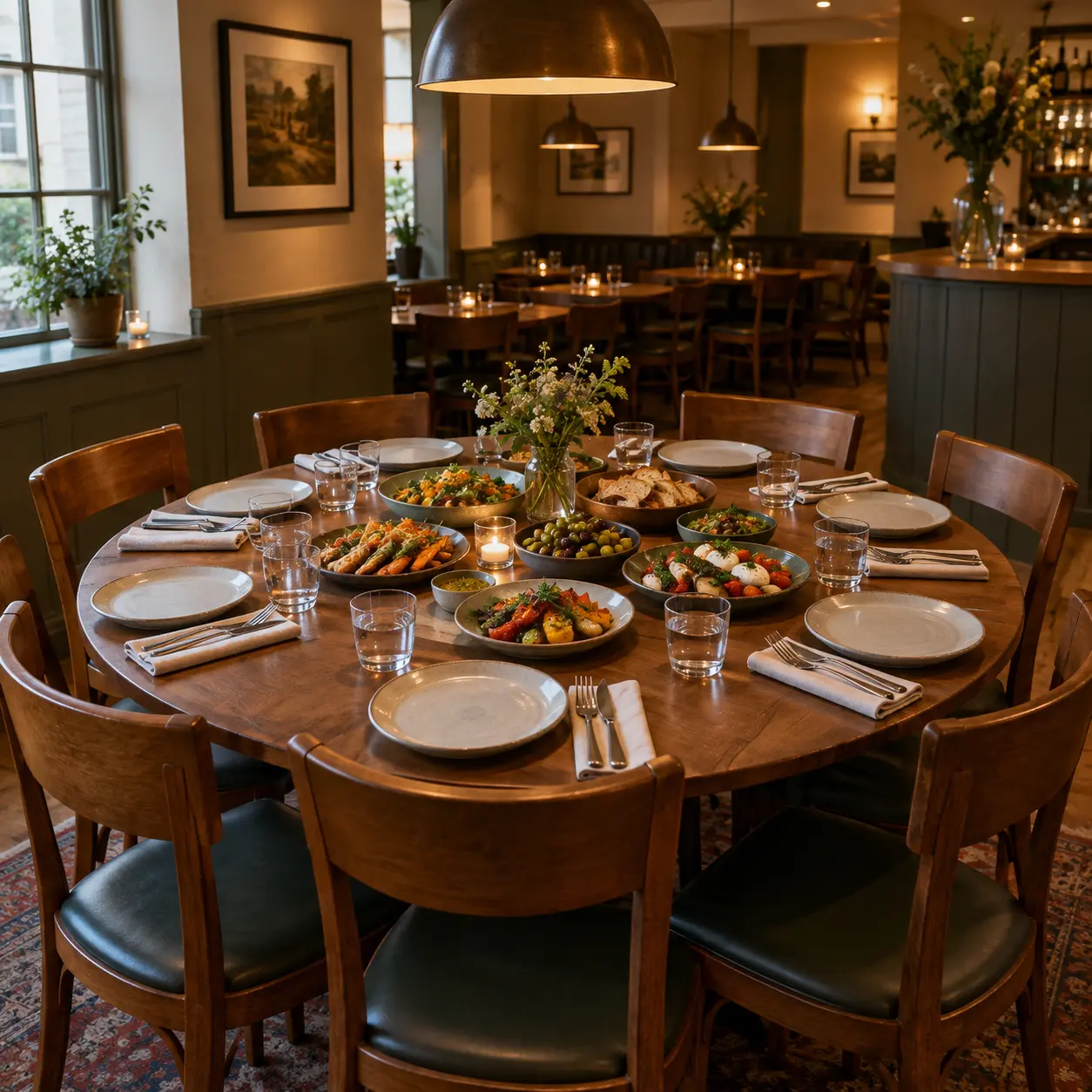
The short answer: to host a group dinner for people who don’t know each other, keep it to six to eight guests, book a restaurant that’s quiet enough to talk with a round or long table, and say up front who pays. Send a clear invite two weeks out and a reminder two days before, arrive early, introduce everyone with a hook, plan seating so nobody’s stuck at the end, have a few conversation prompts ready, and finish on time with a warm goodbye and the next date. This guide gives you the full timeline plus invite, reminder and day-of templates.
A dinner with strangers is one of the best ways to meet new people: everyone has a seat, a shared focus (the food), and two hours of easy conversation. It just needs a host who thinks about the details so the guests don’t have to.
What’s the ideal group size for a dinner with strangers?
Six to eight people is the sweet spot. With six, everyone can join one conversation. With eight, the table naturally splits into two or three conversations, which suits mixed personalities. Beyond ten, people mostly talk only to their neighbours, and the host can’t connect everyone. If you’re starting a regular dinner club, begin at six and grow once you have regulars.
Choosing a restaurant for a group
The venue makes or breaks a dinner with strangers. Look for:
- Noise you can talk over. Visit at the same time and day you plan to book. Hard surfaces and loud music make group conversation exhausting.
- The right table shape. A round table is ideal for six to eight, because everyone can see everyone. A long table works for eight to ten, with the host in the middle.
- A menu that suits groups. Sharing plates, a set menu or a short menu speeds up ordering and gives people something to talk about. Check options for common dietary needs.
- A central, easy-to-reach location near public transport, so people can get there and home on their own.
- Accessibility. Step-free access and accessible toilets if any guest needs them.
- Price that matches your invite. If you say “relaxed and affordable”, pick somewhere that is.
Always choose a public restaurant for a dinner with people you haven’t met. Hosting at home is lovely once everyone knows each other, but not for a first meeting.

The timeline: two weeks out to the follow-up
Two weeks out: book and invite
- Book the table in your name for your planned number, plus one if the restaurant allows flexibility.
- Ask about group policies. Many restaurants ask for a deposit, a pre-order or a set menu for larger tables, and some have cancellation charges. Policies vary, so check when you book and pass any requirements on to guests.
- Decide who pays and say it up front: host pays, split equally, or everyone pays their own. Put it in the invite so nobody’s surprised.
- Send the invite with every detail in one message (see template below).
One week out: confirm and plan
- Confirm your guest list and ask about dietary needs.
- Set up a group chat for confirmed guests so people can say hello before they meet.
- Sketch a rough seating plan (see below).
- Prepare a handful of conversation prompts.
Two days out: remind
- Send a friendly reminder with the time, address and how to find the table.
- Ask anyone who can’t come to let you know, so you can update the booking or fill the seat.
- Confirm final numbers with the restaurant if they asked you to.
On the day
- Send a short day-of message with a photo of the entrance or a landmark, if it helps people find you.
- Arrive 15 minutes early, check the table, and wait at the entrance or bar so nobody walks in to an empty table.
After: follow up
- Thank everyone in the group chat within a day.
- Suggest the next date while the mood is good.
Template: dinner invite
Dinner for new faces: Thursday 26 November
I’m hosting a relaxed dinner for people who’d like to meet someone new. No need to know anyone; most of us won’t!
When: Thursday 26 November, 7:30–9:30pm
Where: [Restaurant name], [street] (table booked under my name)
Seats: 8
Food: sharing plates, with vegetarian and vegan options
Bill: we’ll each pay our own
To join: reply by Sunday and let me know any dietary needsI’ll be there from 7:15. Look for the person in the green scarf.
Template: reminder (two days before)
Hi everyone! Looking forward to Thursday: 7:30pm at [restaurant], table under [your name]. It’s a two-minute walk from the station. If anything’s changed and you can’t make it, just let me know by tomorrow evening so I can update the booking. See you there!
Template: day-of message
Morning all! See you at 7:30 at [restaurant]. I’ll be by the bar from 7:15. If you’re running late, message here and we’ll order some starters. Can’t wait to meet you!
Seating: the host’s secret weapon
- Sit in the middle of a long table, or where you can see everyone at a round one.
- Split up people who arrive together (gently), so friends don’t form a block.
- Seat quieter guests next to warm, chatty ones.
- Mix people with something in common: two people new to the city, two climbers, two people from the same county.
- Swap seats at dessert. A light “Shall we mix it up for pudding?” lets everyone meet someone new.
Introductions and conversation
Introduce with a hook
As people arrive, introduce them with one detail: “This is Aisha, she’s just moved here from Galway and she’s into open-water swimming.” A hook gives people an instant opening line.
One easy round to start
Once everyone’s sat down and ordered, a light question for the whole table breaks the ice: “What’s the best thing you’ve eaten this year?” or “What brought you here?” Keep it optional and quick. For more ideas, see our icebreaker games for adults, especially the dinner-table ones.
Conversation prompts to have in your pocket
- “What’s a dish from home you miss?”
- “Best local recommendation you’ve been given?”
- “What are you looking forward to this month?”
- “What’s the most underrated place round here?”
- “If this table opened a restaurant, what would we serve?”
Our list of fun questions to ask new friends has a whole section for group dinners.
Watch the edges
Your quiet job all evening is spotting anyone who isn’t talking and bringing them in with an easy question, not a spotlight.

Dinner formats that work well for strangers
- Sharing plates. Tapas, mezze, dim sum or a big sharing menu turn ordering into a conversation (“Has anyone tried this?”) and keep everyone involved.
- A themed cuisine night. “Let’s try the Georgian place” or “a different curry house each month” gives the group an identity and something to look forward to.
- A long-table brunch. Daytime, relaxed and often quieter than an evening sitting, which suits people who’d rather not be out late.
- Pizza or a casual canteen. Low cost and low formality make it easy for first-timers to say yes.
- Home potluck, later. Once the group knows each other, taking turns to host at home is lovely. Just not for the first few meetings.
Common mistakes hosts make (and easy fixes)
| Mistake | Fix |
|---|---|
| Booking somewhere too loud | Visit at the same time beforehand, or ask for a quieter corner |
| Inviting too many people | Cap it at eight for strangers; keep a reserve list |
| Being vague about cost | Say who pays in the invite, in one line |
| Arriving last | Get there 15 minutes early and wait by the entrance |
| Letting friends cluster together | Plan a rough seating order and swap seats at dessert |
| No follow-up | Thank everyone and suggest the next date within a day |
None of these are disasters, and most guests won’t notice small hiccups. What they’ll remember is whether they felt welcome and whether they met someone they’d like to see again.
Making everyone feel included
Small touches make a big difference to people who are nervous about joining a table of strangers:
- Ask about dietary needs privately when people confirm, and check the menu works for them before you book.
- Make non-drinkers welcome. Choose somewhere with good soft drinks and never comment on what anyone orders.
- Share practical details in the group chat: step-free access, the nearest station, where to find the table.
- Welcome late arrivals warmly and give them a quick catch-up on who’s who.
Ending the dinner well
- Finish roughly on time. People plan their journeys home around it.
- Give a simple goodbye: “Thanks so much for coming, everyone. Same again next month?”
- Make leaving easy. Some people will want to stay for another drink; others will want to head off. Both are fine.
- Remind people to get home their own way, especially if it’s late.
Handling no-shows and late cancellations
- Ask for 24 hours’ notice of cancellations in your invite.
- Keep a reserve list in your group chat for dropped seats.
- If the restaurant charges for no-shows or has a deposit, tell guests in advance so expectations are clear.
- Don’t let one empty chair dampen the evening. Shuffle seats and carry on.
For kind ways guests can cancel, share our templates for cancelling plans politely.
Turning one dinner into a dinner club
- Pick a rhythm, such as the last Thursday of the month.
- Rotate cuisines or neighbourhoods to keep it fresh.
- Find a co-host to share booking and welcoming.
- Save two seats for newcomers each time so the group keeps growing.
- Use the same templates each month; it saves time and sets expectations.
The same hosting principles apply to any recurring group. See our guide to organising a meetup for the general playbook and our book club host guide for another format that pairs well with dinner.
Host a dinner as a plan
A dinner at a public restaurant, with a date and time, a set number of seats and a clear answer on who pays, is exactly the kind of plan MeetNow, our own app, is built around (see our disclosure). People ask to join with a short note, the host picks who comes, and accepted guests get a group chat.
Want to turn this into an actual plan? MeetNow is a free app for meeting people in person: a host posts a plan at a public place, says who pays (host pays, split, pay your own or free) and picks who joins. It is live on the web now, starting in Malta, with the phone apps on the way: open MeetNow and see the plans near you.
FAQ
How do you host a group dinner for strangers?
Invite six to eight people, book a restaurant that’s quiet enough to talk with a round or long table, say up front who pays, send a reminder two days before, arrive early, introduce everyone with a hook, plan the seating and finish on time.
What is the ideal group size for a dinner?
Six to eight. Six lets everyone share one conversation; eight splits naturally into two or three. Beyond ten, people mostly talk only to their neighbours.
How do you choose a restaurant for a group?
Pick somewhere you can talk over the noise, with a round or long table, a menu that suits sharing or a set menu, options for dietary needs, and easy public transport. Check group booking policies, such as deposits, when you book.
How many courses should a group dinner have?
Two courses, or sharing plates plus a dessert or coffee, usually fills about two hours nicely. A long tasting menu can feel like a marathon with people you’ve just met.
How do you get strangers talking at dinner?
Introduce people with one interesting detail, start with an easy question for the whole table, seat quieter guests next to chatty ones, and swap seats at dessert.
Should a dinner with strangers be at someone’s home?
Not for a first meeting. A public restaurant is safer and more comfortable for everyone. Home dinners work well once the group knows each other.