The short answer: the best dinner party games for adults are ones you can play without leaving the table, with nothing more than paper, pens and a bowl. The hat game, two truths and a lie, the dictionary game, paper telephone, desert island picks and a blind tasting all work brilliantly. Play one light game as people arrive, let the main course breathe, and bring out the bigger game with dessert.
This guide sorts 25 dinner party games by the stage of the evening they suit, with simple rules and what you need for each. There’s also a quick table for picking by group size and how well guests know each other, and a host’s section on introducing games so they feel like fun rather than homework. Everything works for friends, colleagues, a supper club or a table of people who’ve only just met.
- Arrival and drinks: name the guest, desert island picks, two truths and a lie.
- Between courses: the dictionary game, would you rather, rate it out of ten.
- Dessert and after: the hat game, paper telephone, a mini quiz, a blind tasting.
- Need nothing at all: twenty questions, one-word story, the connection game.
Before you start: what makes a good table game
Dinner party games are different from party games. People are sitting down, holding cutlery and trying to eat while the food is hot. The games that work best share a few things:
- Seated and quiet enough. No running around, no standing on chairs, nothing that knocks glasses over.
- Turn-based and quick. Each turn takes seconds, so nobody waits long and you can stop at any time.
- Low kit. Paper, pens, a bowl and a phone timer cover almost everything below.
- Nobody performs alone for long. Team games and round-the-table answers beat solo charades for most adults.
- No drinking required. Every game here works with soft drinks, which keeps things inclusive for guests who don’t drink, are driving or have an early start.
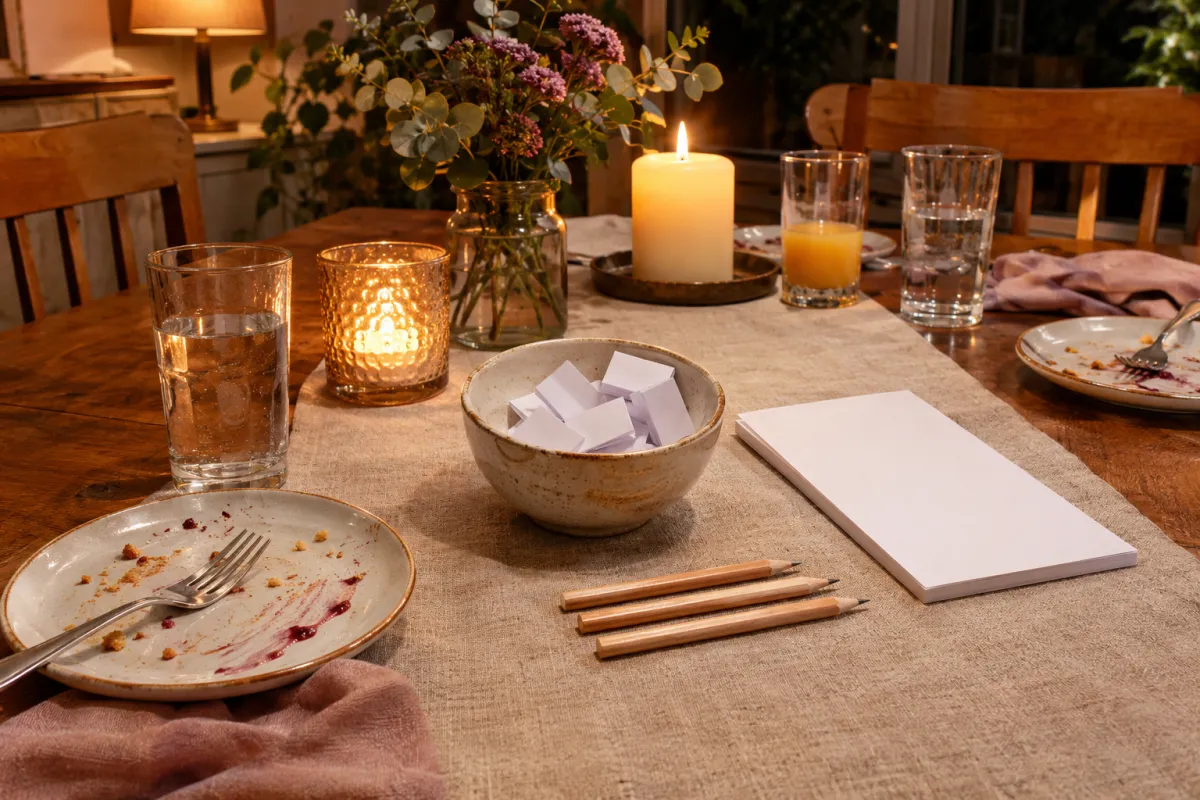
Your kit list: a stack of small paper slips, a pen per guest, a bowl or hat, a phone with a timer, and (for the tasting game) a few small cups. Put it on a side table before guests arrive so you’re not hunting for pens mid-dessert.
If you’re still planning the dinner itself, our guide on how to host a group dinner for people who don’t know each other covers seating, menus and timings.
Dinner party games for arrival and drinks
The first half hour is when guests are most self-conscious, especially if not everyone knows each other. These games are gentle, quick and help names stick.
- Name the guest. Before the party, ask each guest for one surprising fact. Read them out over drinks and let the table guess who each belongs to. Brilliant for mixed groups.
- Two truths and a lie. Each person shares three statements about themselves; the others guess the lie. Keep it to one round as an opener.
- Desert island picks. Everyone names one book, one album and one luxury they’d take to a desert island. Easy, revealing and never too personal.
- The connection game. Give the table two minutes to find three things everyone has in common. Harder than it sounds, and a great icebreaker.
- Guess the dish. Tell guests one secret ingredient in tonight’s menu and see who can work it out by dessert.
For more short openers that work standing up, see our list of icebreaker games for adults that aren’t cringe.
Games between courses
During the main course, conversation usually takes care of itself. Use these in the gap between plates being cleared and the next course arriving, or as a gentle restart if the table goes quiet.
- The dictionary game. One person picks an obscure word from a dictionary (or a phone app) and writes down the real definition. Everyone else writes a convincing fake one. Read them all out; players vote for the one they think is real. Points for fooling people.
- Would you rather. Go round the table with harmless dilemmas: “Would you rather always be ten minutes early or ten minutes late?”
- Rate it out of ten. Someone names a thing (Mondays, airports, brunch, camping) and everyone scores it with one sentence of justification. Surprisingly heated.
- Hot takes. Each person shares a harmless unpopular opinion; the table votes agree or disagree.
- The menu game. Everyone designs a three-course “last supper” from a single cuisine. Ideal at a dinner party because food is already the topic.
- Finish the story. One guest starts a story with a single sentence; each person adds one more. Stop after two laps, while it’s still funny.
- Guess the year. Play the first ten seconds of a song from your phone; the table guesses the year it came out. Closest guess wins.
Keep the main course for talking
Resist the urge to run a game while people are eating the main. Hot food and a game rarely mix, and good conversation is the point of a dinner party. If you need help keeping chat flowing, keep a few good conversation starters in your back pocket instead.
Dessert and after-dinner games
Once plates are cleared, energy often dips. This is the moment for one bigger game, ideally played in teams.
- The hat game. Everyone writes five names (famous people, characters, anyone the whole table would know) on slips and drops them in a bowl. In teams, players take turns to describe as many names as they can in a minute. Round two: one word only. Round three: mime. The same names come back each round, which is where the laughs come from.
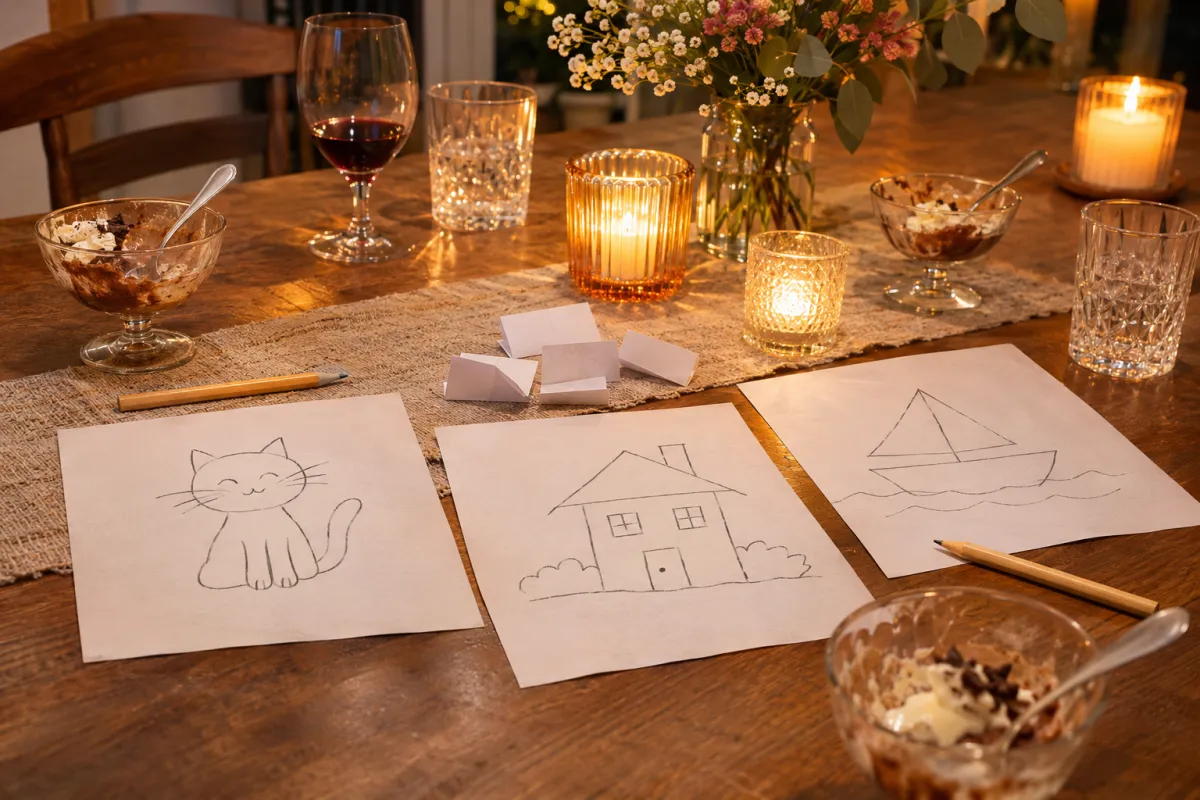
- Paper telephone. Each player writes a sentence at the top of a sheet and passes it on. The next person draws it, folds over the sentence and passes it on; the next writes what they think the drawing shows, and so on. Unfold at the end. No artistic skill needed.
- A mini quiz. Prepare three short rounds: one about the guests (from facts collected beforehand), one general knowledge and one picture round on your phone. Teams of two or three work best. For a fuller format, see our guide on how to host a trivia night.
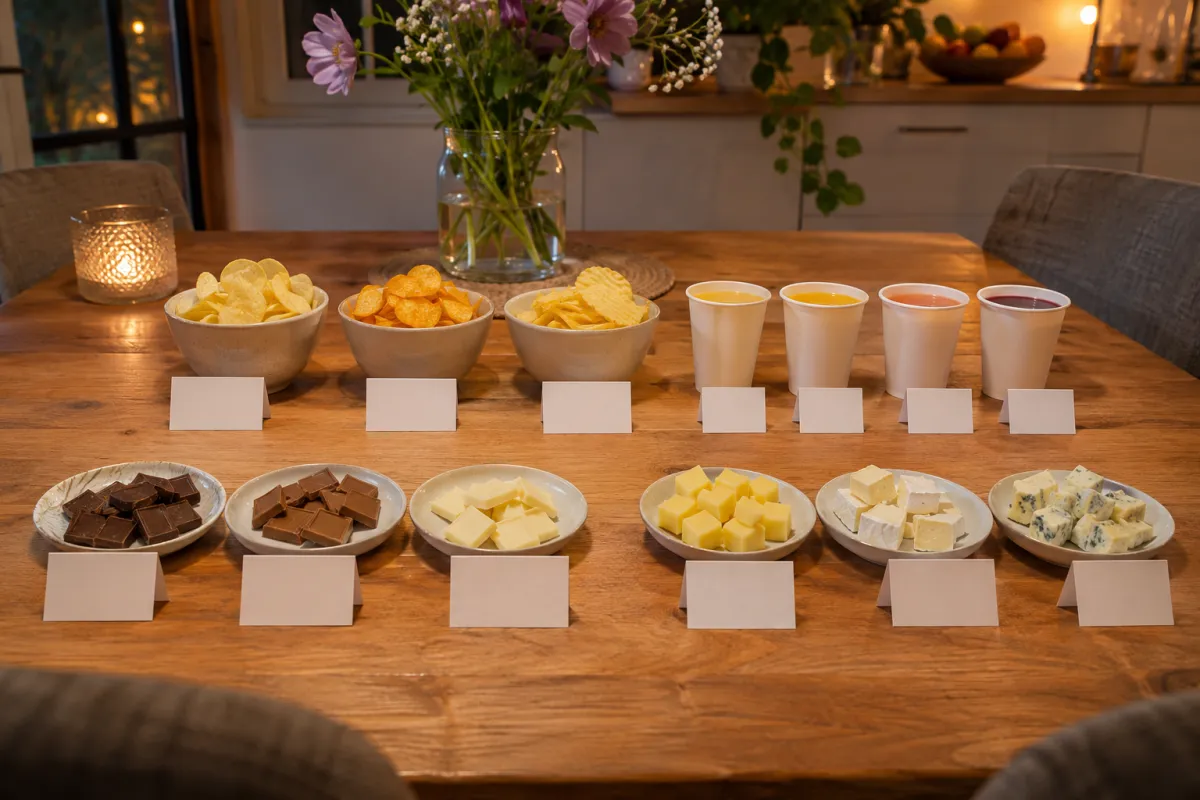
- Blind tasting. Pour small samples of different crisps, chocolates, cheeses or juices, label them with numbers and let teams guess what each is. Works brilliantly alcohol-free.
- Who said it? Read out quotes from films, songs or famous people and let teams guess the source.
- Napkin drawing. One person secretly picks a word; their teammate draws it on a napkin (no letters allowed) while their team guesses against the clock.
- Murder mystery in a box. If your group loves a theme, a boxed murder mystery game gives everyone a character and runs through the evening. Send characters out a week ahead so people can dress up if they want to.
Games that need nothing at all
Forgot the paper? These need only voices, and they’re good back-ups if a game falls flat. For more playful prompts to keep up your sleeve, see our list of fun conversation starters.
- Twenty questions. One person thinks of something; others ask yes-or-no questions until someone guesses it.
- One-word story. Go round the table adding one word at a time to a story. Harder and funnier than it sounds.
- Categories. Pick a category (cheeses, capital cities, Bond films). Go round naming one each; anyone who hesitates or repeats is out.
- Fortunately, unfortunately. Alternate sentences starting “Fortunately…” and “Unfortunately…” to build a ridiculous story.
- Celebrity alphabet. Name a famous person; the next player names one whose first name starts with the first letter of the previous surname.
- Best and worst. Everyone shares the best and worst thing about their week. Gentle and a nice way to wind down.
How to choose: a quick table
| Situation | Best picks | Avoid |
|---|---|---|
| Guests don’t know each other | Name the guest, desert island picks, team quiz | Never have I ever, anything personal |
| Old friends | Hat game, hot takes, dictionary game | Long rule explanations |
| 4 to 6 people | Dictionary game, paper telephone, twenty questions | Team games that need even numbers of large teams |
| 8 to 12 people | Hat game, mini quiz, blind tasting in teams | Round-the-table games with long turns |
| Mixed drinkers and non-drinkers | Anything here, served with soft drinks | Drinking games of any kind |
| Quiet, tired table | Best and worst, rate it out of ten | Charades or loud team games |
How to host games without the cringe
The difference between a game everyone loves and one people endure is usually the host. These habits make it easy.
- Offer, don’t announce. “Anyone up for a quick game with dessert?” lands better than “Right, everyone, it’s game time.”
- Explain in one breath. If the rules take more than thirty seconds, pick a simpler game. Play one practice round instead of explaining more.
- Go first. Show the tone by answering first, and make it a little silly.
- Mix the teams. Split couples and old friends so newer guests get to know someone new.
- Let people opt out. Some guests prefer to watch or keep score. That’s fine; give them a job.
- Keep it kind. No questions about money, bodies, exes or anything that could embarrass someone in front of the table.
- Stop while it’s fun. Two rounds that end in laughter beat five that end in yawns.
Planning the next one
A good games dinner often turns into a regular thing. If the table is asking “When’s the next one?”, you’ve found your format. Our supper club ideas and potluck ideas for groups make it easy to share the cooking, and our guide to hosting a board game night is perfect if the games become the main event. If you’d rather meet somewhere public, a café or restaurant table works for almost every game above, and if your guest list keeps growing, our guide to large group activities shows how to keep 20 or more people involved.
Full disclosure: MeetNow is our own app. It is made for small hosted plans like a games dinner at a restaurant: the host posts the plan at a real public place with a date, time and number of seats, says who pays (host pays, split, pay your own or free), and people ask to join with a short note. The host picks who comes and accepted guests get a group chat to sort the details.
Want to turn this into an actual plan? Open MeetNow and see the plans in Malta: it is live on the web now, starting in Malta.
Frequently asked questions (FAQ)
What are good dinner party games for adults?
The best are games you can play seated with almost no kit: the hat game, two truths and a lie, the dictionary game, paper telephone, desert island picks and a blind tasting. They fit between courses and nobody has to perform alone.
When should you play games at a dinner party?
Use one light game as guests arrive or during starters, avoid anything that stops people eating during the main course, and save the bigger game for dessert, when plates are cleared and energy dips.
What dinner party games work for people who don’t know each other?
Choose games where everyone answers in turn and nothing is too personal: name the guest, desert island picks, two truths and a lie, or a team quiz. Avoid drinking games and “never have I ever” with strangers.
How many people do you need for dinner party games?
Most table games work with four to ten people. With more than ten, split into two tables or two teams so nobody waits too long for a turn.
Do dinner party games need alcohol?
No. Every game in this list works with soft drinks, and keeping games alcohol-free makes them more inclusive for guests who don’t drink, are driving or have an early start.