Most worries about what to wear to a meetup for the first time come down to one fear: walking in and looking as if you misread the invitation. The reassuring truth is that almost nobody at a first meetup is studying your outfit. They are thinking about their own nerves, the name of the person next to them and whether it is too early to order a drink.
So the aim is not to look impressive. It is to wear something comfortable, practical and a little bit you, so your attention is free for the people in front of you. This guide gives you outfit ideas by type of event, the practical choices personal safety organisations actually recommend, and copy-paste scripts for arriving, remembering names, feeling left out and leaving.
If you are heading along on your own, it pairs well with our calm guide to going to a meetup alone.
What to wear to a meetup for the first time: the simple rule
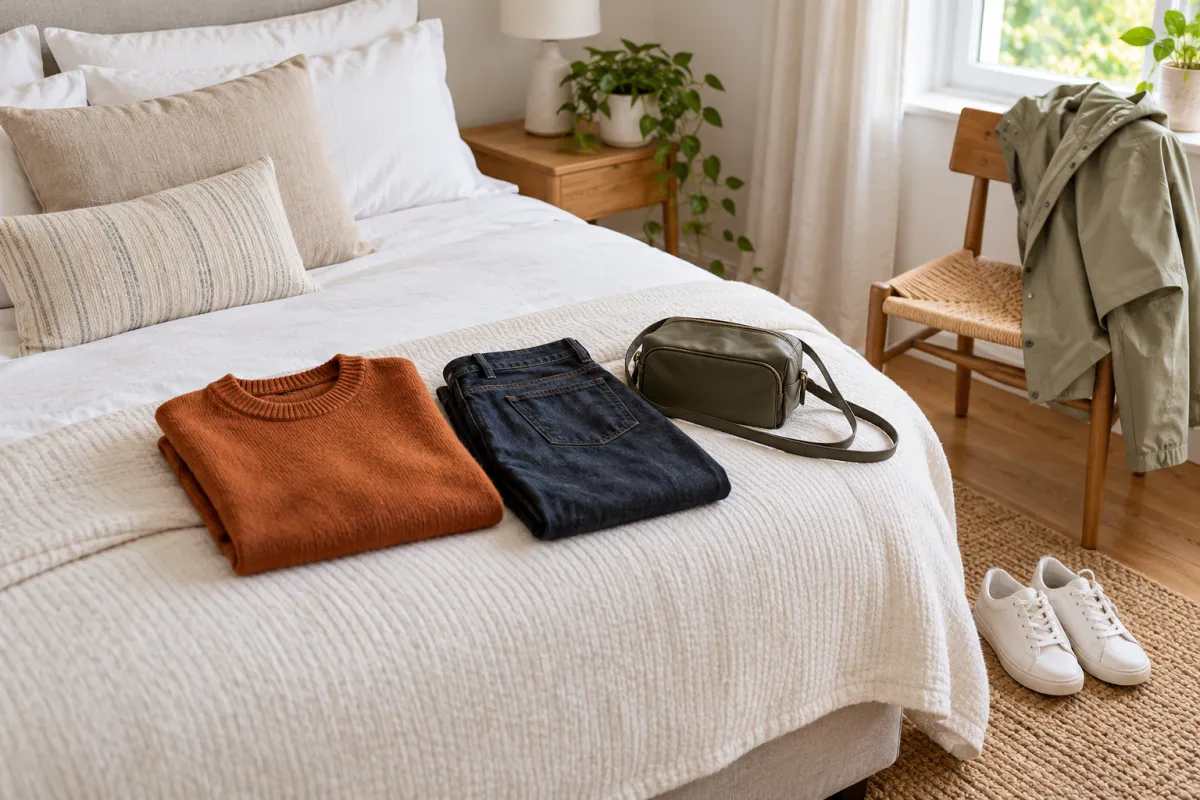
Here is the rule that works for most first meetups, whether it is a book club, a walking group, a board game afternoon or a coffee with a friend of a friend: dress one notch smarter than running errands and one notch more relaxed than a work meeting. That usually means clean jeans or trousers, a top or jumper you like, and shoes you have already broken in.
Smart-casual is forgiving. If everyone else is in hoodies, you look neat. If everyone else has made an effort, you still fit in. It is the safest middle ground when you genuinely do not know the crowd.
Three questions to ask before you choose
- Where is it? A café, a pub, a park, a museum and a restaurant all call for slightly different shoes and layers.
- What will we be doing? Sitting, standing, walking, eating messy food or moving pieces around a board all change what is comfortable.
- How am I getting there and home? If you are walking to the bus or train, your shoes and coat need to handle that journey too.
The tested-outfit rule
Wear something you have worn before and felt good in. A first meetup is not the moment to debut new shoes, a top that needs constant tugging or trousers you are not sure about when you sit down. A tested outfit is one less thing to think about, and that frees up surprising amounts of headspace for conversation.
One small, characterful detail helps too: a colourful scarf, a favourite jacket, interesting earrings or a band T-shirt under a shirt. It gives people an easy opener, and it makes you easier to remember.
A lower-pressure way to meet. If big events feel like a lot, a smaller plan can help. MeetNow, coming soon to the App Store and Google Play, is built around small plans at public places: the host has already accepted you before you go, and there is a group chat beforehand, so you can simply ask “What’s everyone wearing?” and arrive knowing roughly what to expect.
Outfit ideas by type of meetup
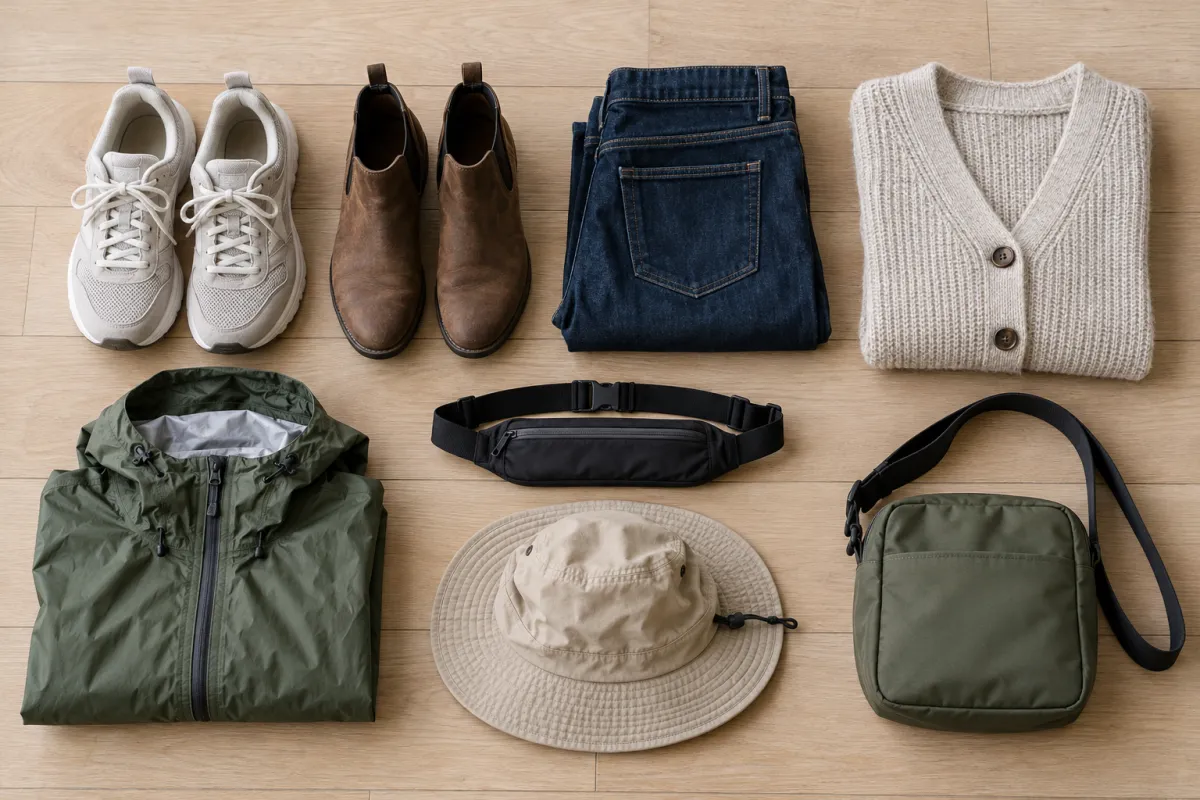
Use this table as a starting point, then adjust for your own style and the weather. None of it is a rule; it is just what tends to feel comfortable in each setting.
| Type of meetup | What works well | What to skip |
|---|---|---|
| Coffee or brunch at a café | Jeans or chinos, a knit or shirt, clean trainers or ankle boots | Pale colours you would worry about spilling coffee on |
| Pub quiz or after-work drinks | Dark jeans, a smart-casual top, flats or boots, a light layer | Shoes you cannot stand in for a couple of hours |
| Walking group, parkrun or running club | Activewear, broken-in trainers, a waterproof layer, a zipped running belt | Brand-new trainers, heavy cotton that stays wet |
| Board game café or craft session | Comfortable layers, sleeves you can push up | Bulky bracelets that knock pieces over |
| Book club or supper club in a restaurant | Smart-casual with a jumper or blazer | Very formal clothes unless the invitation says so |
| Gallery, museum or market | Comfortable shoes for standing, a crossbody bag | A big backpack you will need to check in or keep apologising for |
| Beach meetup or barbecue | Breathable layers, a hat, sunscreen, sandals you can actually walk in | Footwear that rubs when it gets sandy or wet |
| First date | What you would wear to meet a good friend, plus one detail you love | Anything that needs constant adjusting |
When the invitation says nothing
Asking is completely normal, and organisers are usually glad you did. It shows you are coming and that you care. Copy and paste this:
“Hi! Really looking forward to Saturday. Quick one: is it pretty casual, or do people tend to dress up a bit?”
For activity-based plans, add: “Anything I should bring, like a water bottle or a rain jacket?”
Safety-minded choices that still look like you
There is no official dress code for meeting someone new. What personal safety organisations do talk about is practicality: being comfortable, being able to move and keeping hold of your things. None of this means you should expect trouble. It simply means your outfit works for you, whatever the day brings.
- Shoes you can move in. The Suzy Lamplugh Trust advises choosing clothes and, crucially, shoes that let you move freely and quickly if you need to walk to public transport, catch a taxi or leave a venue at short notice.
- Zipped pockets or a close-fitting bag. South Australia Police suggest clothing with secure, preferably zipped, pockets for small essentials such as your phone, cash and cards. A crossbody bag that sits in front of you does the same job.
- Dress for your own journey home. Plan to get there and back under your own steam rather than relying on a lift from someone you have just met. If that means a 15-minute walk to the station, your shoes and coat should be up to it.
- Keep your senses free. Clothing should help you feel confident without blocking your view or hearing. Hoods down, sunglasses off indoors and headphones away once you arrive.
- Pair it with a public place. Practical clothes go hand in hand with meeting in busy, well-lit public venues such as cafés and restaurants rather than private or secluded spots.
Two more habits sit alongside your outfit: tell a friend where you are going and when you expect to leave, and remember you can leave any time you feel uncomfortable. Our group meetup safety tips have a fuller checklist for guests and hosts.
Dressing for the weather in the UK, Ireland and Australia
UK and Ireland: plan for rain, then for warm pubs
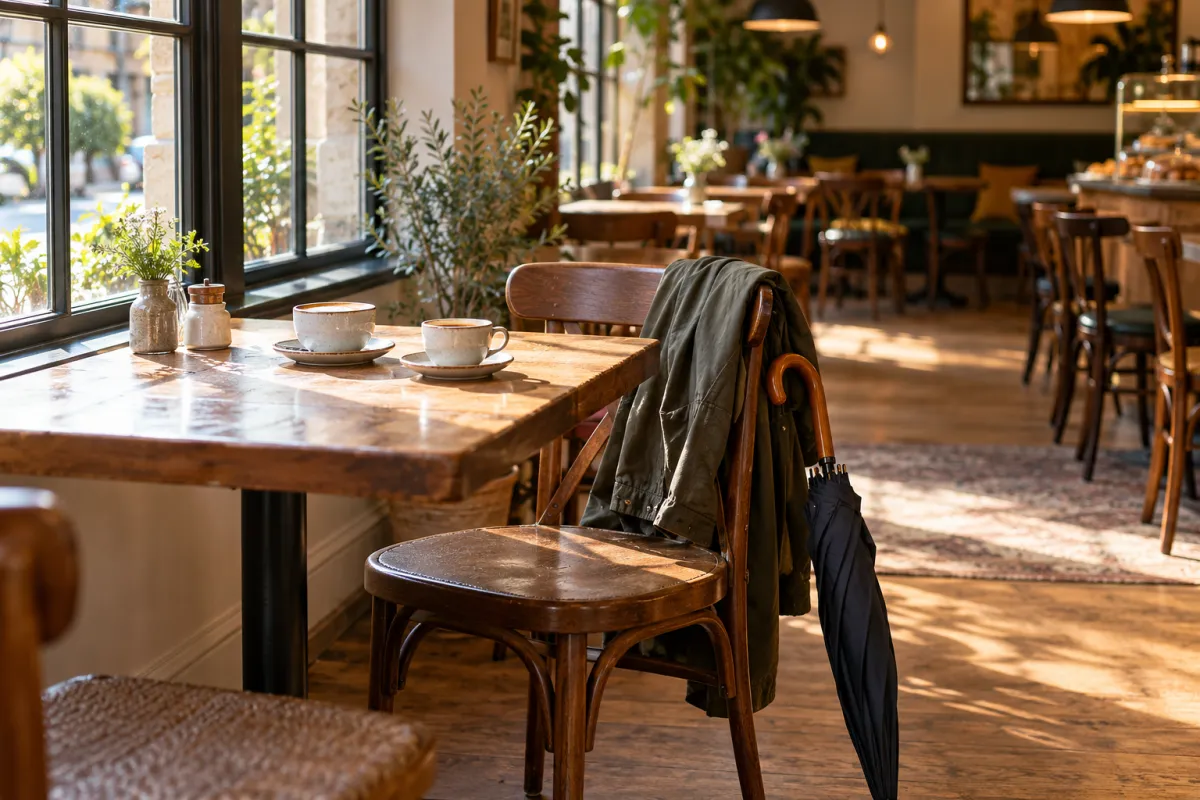
The classic mistake is a heavy coat with only a thin top underneath. You arrive soaked, then sit in a warm pub or café unable to take the coat off. Layers solve it: a light top, a jumper or cardigan, and a packable waterproof that folds into your bag. Water-resistant boots or trainers with decent grip are kinder than canvas shoes on wet pavements. An umbrella is fine for cafés, less fun for walking groups.
Australia: sun, sudden changes and strong air-con
For outdoor meetups, a hat, sunglasses for the walk, sunscreen and breathable fabrics matter more than looking polished. Bring a light layer even in summer: indoor venues can be chilly with the air-conditioning on, and the weather can turn later in the day. Sandals are fine if you can walk comfortably in them for a while; slip-ons that fall off are not.
Arriving: scripts for the first five minutes
Once you are dressed, decide you are done. One final glance at the door is enough; repeated mirror checks only feed the nerves. The first five minutes feel biggest, so have a line ready.
Finding the host
“Hi, are you the host? I’m Sam, we messaged about the walk.”
Walking up to a group
“Hi, is this the book club? I’m new. Mind if I join you?”
If you are early
“I’m a bit early, so I’ll grab a coffee and be right over.”
If your outfit is miles off
Light humour defuses it instantly, and people tend to warm to someone who can laugh at themselves:
“I clearly missed the memo on the dress code. Next time I’ll know!”
Then move on to a question about the activity or the place. If you want more openers for a group that is already chatting, our guide on how to start a conversation in a group has scripts that work.
How to remember names when meeting people
Forgetting a name seconds after hearing it is extremely common, especially when you are nervous, because your brain is busy managing the introduction itself. A few simple habits make a real difference.
- Say it back straight away. “Leah, lovely to meet you.” Hearing yourself say it helps it stick.
- Use it once more early on. “Leah, have you been to one of these before?” Once is enough; more starts to sound like a sales pitch.
- Link it to something visual. This is where outfits help. “Leah in the green coat” or “Tom with the running belt” is easier to recall than a name alone.
- Ask a small follow-up. “Is that Leah with an h?” or “Is Niamh an Irish name?” A few extra seconds on the name gives it time to land.
- Make a quick note afterwards. A line in your phone notes on the way home, such as “Leah, green coat, teacher, has a greyhound”, makes the next meetup much easier.
- Use the group chat. If there is one, names and faces are often right there to check before and after.
Scripts for when you have forgotten
“I’m so sorry, I’ve completely blanked on your name. I’m Sam.”
“Remind me of your name? I’m hopeless with names on first meetings.”
Most people are relieved to hear it, because they have probably forgotten yours too. Offering your own name again makes it easy for them to return the favour.
Feeling left out in a group of new people
Feeling left out in a group of new people is one of the most common first-meetup experiences, and it is rarely about you. Regulars naturally drift towards people they know, conversations split into small clusters and nobody is quite in charge of including the newcomer. It feels personal; it usually is not.
What to do
- Look for the edges. Someone else standing slightly apart is often new too, and usually delighted to be spoken to.
- Ask about the activity, not the person. “Is it always this busy?” or “Which game would you recommend for a beginner?” is low pressure for everyone.
- Offer to help. Hosts often welcome a hand with chairs, a drinks order or handing out quiz sheets, and helping gives you an instant role.
- Give yourself a time marker. Decide in advance how long you will stay before checking in with yourself, rather than judging the whole event in the first few awkward minutes.
Scripts for joining a conversation already going
“Mind if I join you? I don’t know anyone here yet.”
“Sorry to jump in, did you say you’d done the coastal walk? I’ve been meaning to try it.”
“I’m new. What’s the best thing about this group?”
If the nerves start well before you leave the house, our calm plan for anxiety before social events walks through the build-up step by step.
Leaving politely (and the Irish goodbye)
Knowing how you will leave makes it easier to arrive. You do not need a perfect excuse; a warm, short line is plenty.
“This was lovely. I’m going to head off now, but hopefully see you at the next one.”
“I’ve got an early start, so I’ll make a move. Great to meet you, Leah.”
“Thanks so much for organising. I really enjoyed it.”
In a big, busy group, slipping away quietly is often fine, as long as you send the host a quick message afterwards: “Had to slip off, but thanks for a great afternoon!” Our guide to the Irish goodbye explains when that works and when it is better to say goodbye properly.
If you feel uncomfortable at any point, you can leave without any explanation at all. Your comfort is reason enough.
Before, during and after checklist
Before
- Check the venue, the activity and the weather forecast.
- Ask the organiser or group chat about dress code if you are unsure.
- Pick a tested outfit the day before, including shoes you have walked in.
- Choose a jacket or bag with a zipped pocket for your phone, keys and card.
- Charge your phone and plan your own way there and home.
- Tell a friend where you are going and roughly when you will be done.
During
- Keep your phone and card zipped away but easy to reach.
- Introduce yourself and say each new name back once.
- Keep an eye on your drink and go at your own pace.
- Take a short breather outside or at the bar if you need one.
- Leave whenever you are ready, or straight away if something feels off.
After
- Get home your own way and text your friend that you are back.
- Jot down the names and one detail about each person.
- Send the host a quick thank-you if you would like to go again.
- Be gentle with yourself if you replay every moment; our guide to the social hangover explains why it happens and how to recover.
A small-steps plan for your first few meetups
Confidence at meetups grows the way fitness does: in small, repeated steps rather than one giant leap.
- Start small and daytime. Choose an activity-based plan, such as a walk, a coffee or a board game session, where there is something to do besides talk.
- Settle the outfit and route early. Decide what you will wear and how you will get home the day before, so the morning is calm.
- Set one tiny goal. For example: learn three names, or ask two people one question each. Hitting it counts as a win, however the rest goes.
- Leave on a high note. Going home while you are still enjoying yourself makes the next meetup feel more appealing.
- Repeat, then stretch. Go back to the same group once or twice before trying something bigger. Familiar faces make everything easier.
If nerves about meeting people are persistent, or they stop you doing things you want to do, it is worth talking to someone. In the UK, the NHS has information and support for social anxiety; in Ireland, the HSE offers mental health guidance and services; and in Australia, Beyond Blue and Head to Health are good places to start.
Want to turn this into an actual plan? MeetNow is a free app for meeting people in person: a host posts a plan at a public place, says who pays (host pays, split, pay your own or free) and picks who joins. It is launching in Malta first and is not in the App Store or Google Play yet: join the MeetNow waitlist and we’ll email you when it launches near you.
FAQ
Should I dress up or down for a first meetup?
Aim for the middle. Smart-casual, one notch above what you would wear to the shops, fits in almost everywhere: if others are very casual you look neat, and if they have made an effort you still blend in. If the invitation mentions a dress code, follow it.
What shoes should I wear to a meetup?
Wear shoes you have already broken in and can comfortably walk in for a long while, including the journey to and from public transport. Personal safety guidance stresses shoes that let you move freely and leave quickly if you need to, so skip anything new, very high or likely to rub.
Is it OK to ask the organiser what to wear?
Yes, and most organisers are glad you asked. A short message such as asking whether it is casual or whether people dress up a bit shows you are coming and care about fitting in. For activity plans, ask whether to bring anything like a rain jacket or water bottle.
What if I turn up overdressed or underdressed?
Make a light joke about missing the memo, then move the conversation on to the activity or the venue. People remember how you made them feel far more than what you wore, and a bit of self-deprecating humour often makes you more approachable.
How do I remember names when meeting lots of people at once?
Say each name back straight away, use it once more early in the chat and link it to something visual, such as a coat or a hobby. Jot names down in your phone on the way home. If you forget, simply say sorry, you have blanked, and offer your own name again.
What should I do if I feel left out at a meetup?
Remember it is usually about group dynamics, not you. Look for someone else on the edge, ask a simple question about the activity or offer to help the host. If it still does not feel right after giving it a fair chance, it is fine to leave politely and try a different group next time.