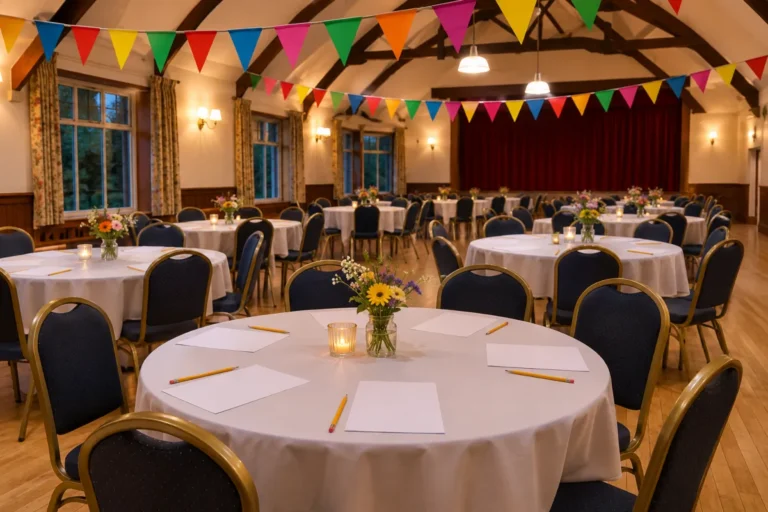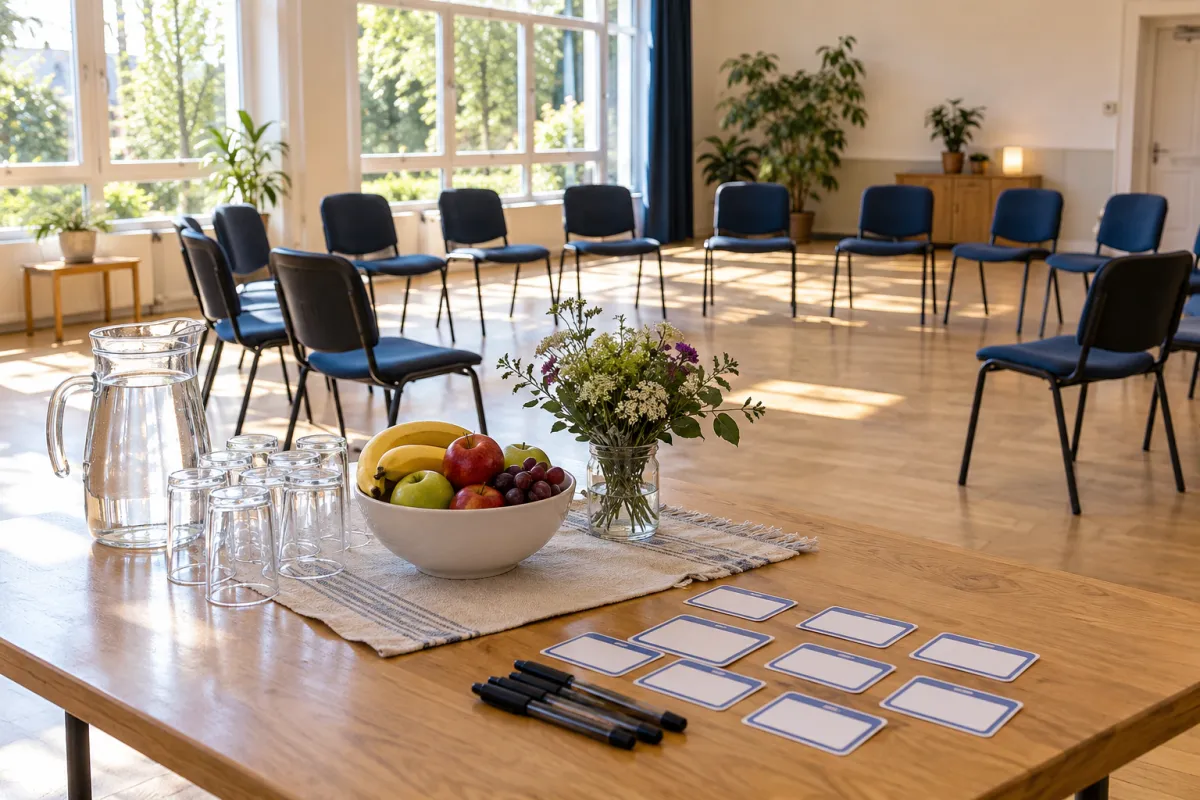
The short answer: going to a meetup event for the first time is much easier once you know what to expect. You find a group on an app like Meetup, RSVP to an event, and turn up at a public venue where an organiser welcomes people, often with a quick round of names, then the activity (a walk, a language exchange, a games night, drinks), with time to chat before or after. Most groups are used to newcomers arriving alone. Say hello to the organiser, mention it’s your first time, join one conversation, and stay for the coffee afterwards. Then go back: friendships come from the second and third visit.
This guide covers how meetup groups and RSVPs work, how to choose a good first event, what to message beforehand, what actually happens when you arrive, a first-30-minutes plan, common first-time worries, and how to turn one event into regular friends. If nerves are the main thing holding you back, our guide to going to a meetup alone focuses on that side.
How meetup groups and events work
On Meetup and similar platforms, groups are run by organisers around a shared interest or situation: walking, running, board games, language exchange, books, tech, new-in-town, and much more. Each group posts events with a date, time, place and description.
- Joining a group is usually free; some groups ask a few profile questions first.
- RSVP to an event so the organiser knows how many to expect. If you can’t go, change your RSVP so someone else can have the place.
- Attendee limits and waitlists. Popular events may have a cap. Meetup’s help centre explains that once an event with an attendee limit fills up, members can join a waitlist, and that waitlists aren’t offered on events with a mandatory fee. It also says members with a paid Meetup+ subscription are moved off the waitlist ahead of others.
- Fees. Many events are free to attend (you pay for your own food and drinks). Some groups charge a small fee to cover room hire or materials; the event page shows it before you RSVP.
- Organisers and hosts. The organiser runs the group; an event may have a named host who’ll be your first point of contact on the day.
Features and pricing change, so check the app’s own help pages for the current details. For a comparison of Meetup with other UK options, see our guide to friend apps in the UK, and if you’re in London, our list of meetup groups in London is a good place to start.
How to choose a good first event
| Look for | Why it matters |
|---|---|
| Recent past events with photos or comments | Shows the group is active, not a dead listing |
| Regular schedule (weekly, fortnightly, monthly) | You can go back easily and see the same faces |
| “Newcomers welcome” or “come alone” in the description | The group expects first-timers |
| An activity (walk, game, class, quiz) | Gives you something to do and talk about |
| Small or medium size (8–25 attending) | Easier to join conversations than a 100-person mixer |
| A named host for the event | Someone to find when you arrive |
| A public venue near transport | Easy to get to, easy to leave |
Good first events include walking groups, language exchanges, board-game nights, newcomers’ socials and pub quizzes. Big networking mixers in loud bars are usually the hardest place to start.

Before the event: going to a meetup event for the first time
Read the event page properly
- Exact venue and where in the venue (the back room, the upstairs bar, the park gates).
- What the host will be wearing or holding, if mentioned.
- What to bring: walking boots, a book, cash for a quiz.
- Start and end times, and whether people go on somewhere afterwards.
Messages you can send
Many organisers welcome a short message from first-timers. Keep it light:
- “Hi! I’ve RSVPd for Thursday’s games night, it’ll be my first time. Is there anything I should know?”
- “Hello, looking forward to Saturday’s walk. How will I spot the group at the meeting point?”
- In the event comments: “First time coming, see you there!” Regulars often reply with a welcome.
Practical basics
- Plan your route there and back, including the last train or bus.
- Tell a friend where you’re going.
- Charge your phone and bring a little cash.
- Decide a rough leaving time, so you know you can go if it’s not for you.
What happens when you arrive
Most meetup events follow a similar shape:
- Finding the group. Look for a sign, a reserved table or a cluster of people looking around. If you can’t spot them, message the host or ask staff: “Is there a meetup group here?”
- The welcome. The host says hello, may ask your name and whether it’s your first time, and often introduces you to someone.
- Introductions. Some groups do a quick round: name and one fact. Keep yours short: “I’m Sam, I moved here in the summer, and this is my first walk.”
- The activity. The walk, game, talk or language rounds.
- The social bit. A coffee, a drink or food afterwards. This is often where friendships actually start.
Your first 30 minutes: a simple plan
- Minutes 0–5: find the host and say hello. “Hi, I’m Sam, it’s my first time.” Get a drink or a seat.
- Minutes 5–15: join one conversation. Look for an open group or someone else on their own. Ask “How long have you been coming?”
- Minutes 15–30: settle into the activity. Follow up on what people tell you, and share a little about yourself.
If joining a circle that’s already talking feels hard, our guide on how to start a conversation in a group has scripts for exactly that moment.
A worked example
Priya has just moved to Manchester and RSVPs to a Saturday walking group. The day before, she comments on the event: “First time coming, see you there!” The organiser replies, “Welcome! Look for the red umbrella by the station.” On the day she finds the umbrella, says hello, and the organiser introduces her to Jo, who joined two months ago. They chat on and off during the walk, and at the café stop Priya asks the table how long they’ve all been coming. Two weeks later she goes again; Jo waves her over. By the third walk, Priya is the one telling a nervous newcomer where to stand.
What to expect by event type
| Event | What usually happens | Tip for first-timers |
|---|---|---|
| Walking or hiking group | Meet at a set point, walk at a steady pace, often a pub or café stop | Chat to different people at stiles and breaks |
| Language exchange | Tables by language; switch partners or languages in rounds | Bring a few simple questions in both languages |
| Board-game night | Games on tables; hosts help newcomers join a game | Ask to join a “teaching” table |
| Pub quiz group | Teams form on arrival | Ask the host to put you on a team |
| Newcomers’ social | Informal drinks or brunch, lots of first-timers | Easiest place to start conversations |
| Talk or workshop | Presentation, then questions and mingling | Use the talk as your opening topic |

Common first-time worries, answered
- “Everyone will already know each other.” Some will, but regular groups rely on new members and most have someone who looks out for first-timers. Asking “How long have you been coming?” turns that worry into a conversation.
- “I’ll be the only one on my own.” At walks, language exchanges and newcomers’ events, coming alone is the norm.
- “What if I can’t find them?” Message the host, check the event comments, or ask staff. Arriving five minutes after the start, when the group is visible, also helps.
- “What if it’s awkward and I want to leave?” You can. A simple “Thanks, I’m heading off” is enough, and most people won’t think twice.
- “What if I don’t click with anyone?” One event is a small sample. Try the same group once more, or a different format, before deciding it isn’t for you.
- “Do I have to talk in front of everyone?” Introduction rounds are short. “I’m Sam, it’s my first time” is a complete answer.
Staying comfortable and safe
- Meetup events are usually in public venues, which helps. Still tell a friend where you’re going.
- Keep your own transport and don’t feel obliged to go on somewhere afterwards.
- If anyone makes you uncomfortable, tell the organiser and report them through the app.
- It’s fine to leave early: “Thanks, I’m heading off. See you next time!”
After the event: turning one meetup into friends
- Go back. The second visit is where people start to recognise you. The third is where they save you a seat.
- Stay for the after-bit when you can. Coffee or a drink afterwards is where proper chats happen.
- Comment or message the group. “Thanks for a great walk, see you next month!” helps people remember you.
- Suggest a small follow-up to someone you clicked with: “Fancy getting a coffee before the next one?”
- Offer to help. Groups always need people to welcome newcomers, book tables or lead a walk. Helping is the fastest way to become part of the furniture.
Copy-paste follow-ups:
- “Great to meet you at the games night! Are you going to the next one?”
- “Thanks for showing me the ropes at the walk. Coffee before the next one?”
- “I really enjoyed chatting at the language exchange. Want to practise over a coffee some time?”
For the full chat-to-friendship process, our step-by-step guide on how to meet a friend from an app covers second meetups too.
Prefer something smaller?
Big meetup events suit some people; others find a small plan with a few people far easier for a first step. Full disclosure: we’re the team behind MeetNow, our own app, where a host posts a small plan at a public place and picks who joins, and accepted guests chat in a group before meeting.
Want to turn this into an actual plan? MeetNow is a free app for meeting people in person: a host posts a plan at a public place, says who pays (host pays, split, pay your own or free) and picks who joins. It is live on the web and works in your browser, starting in Malta; the phone apps are not in the App Store or Google Play yet. Open MeetNow and see the plans posted in Malta.
FAQ
What happens at a Meetup event?
It depends on the group: a walk, a language exchange, a games night, a talk or drinks. Usually an organiser or host welcomes people, there may be a quick round of introductions, then the activity, with time to chat before or after. Most groups are used to newcomers turning up alone.
Do I need to RSVP to a Meetup event?
Yes, RSVP so the organiser knows how many to expect, and change your RSVP if you can’t go. Events with an attendee limit can fill up; Meetup then offers a waitlist on events without a mandatory fee.
Is it weird to go to a Meetup event alone?
No. Many people at Meetup events come on their own, especially newcomers’ groups, walks and language exchanges. Say hello to the organiser when you arrive and mention it’s your first time.
Are Meetup events free?
Many are free to attend, though you pay for your own food and drinks. Some groups charge an event fee to cover costs such as room hire. The event page shows any fee before you RSVP.
How do I choose a good first Meetup event?
Pick a group that meets regularly and has recent past events, choose an activity-based or small event, read the description for who it’s for, and look for welcoming notes such as “newcomers welcome”.
How do I make friends from Meetup events?
Go back two or three times so faces become familiar, stay for the coffee or drink afterwards, and suggest a small follow-up plan to someone you clicked with.