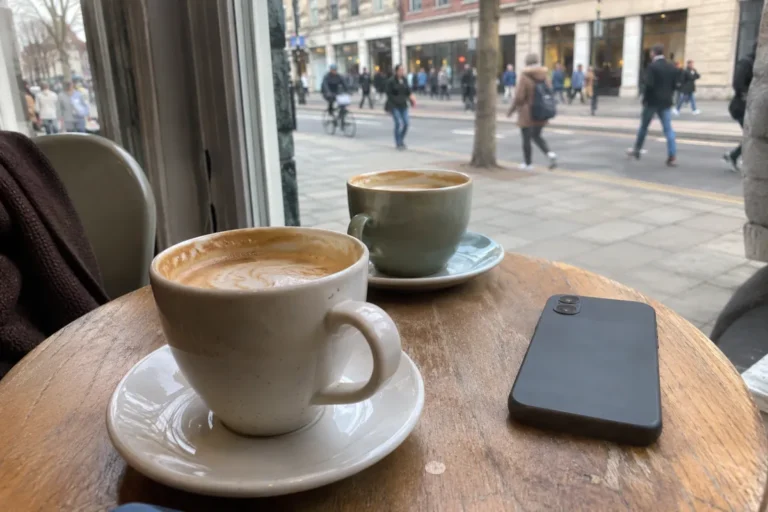
You have been swapping voice notes, memes and long opinions about the same series for months, and at some point one of you types “we should actually meet”. Then nothing happens. Working out how to turn online friends into real meetups is mostly about getting past that exact moment: swapping a vague “we should” for a specific, easy-to-accept plan.
The awkward part is smaller than it feels. Plenty of people who say “we should meet” genuinely mean it; they are simply waiting for someone else to name a place and a time. Being the one who does it is not pushy. It is helpful.
This guide covers the whole journey, whether your friend is from a gaming server, a hobby forum, a group chat or a friendship app: how to tell you are both ready, the words to use, how to pick the first plan, timekeeping, bringing someone along, the safety basics and what to send afterwards. Every script is written to be copied, tweaked and sent.
Signs you are both ready to meet
There is no correct number of weeks or messages before meeting. What matters is whether the friendship has moved past the opening small talk and whether meeting would feel like a natural next step rather than a leap. A few signs it is time:
- You talk about more than the shared interest. You know a bit about their week, their job or their flatmates, not just their opinion on the latest update.
- They have hinted at it. Lines like “if you’re ever in Leeds” or “I reckon we’d get on in person” are open doors.
- You have heard their voice. A voice note, call or video chat makes the first meeting far less strange.
- There is a natural hook. A gig, an exhibition, a market, a match or a community run you are both interested in gives the meetup a reason to exist.
- You both live within reach, or one of you is travelling to the other’s city anyway.
If you have only ever exchanged text, a short call first is worth it. It confirms the person is who they say they are and it takes the edge off the first hello. Australia’s online safety regulator, eSafety, suggests not rushing off a platform too quickly and having a video call before meeting face to face; our guide to having a video call before meeting in person includes what to say so it does not feel like an interview.
Script 1, suggesting a quick call first: “I feel like we’d get on in person. Fancy a quick video call this week first? Ten minutes, no pressure, just so it’s not weird when we finally meet.”

How to turn online friends into real meetups in five steps
The method below is how to turn online friends into real meetups whether it is a one-to-one friendship or a whole group chat moving offline. It is built around one idea: the more specific and low-stakes the suggestion, the easier it is to say yes.
1. Float the idea lightly
Test the water before you put a date in the diary. A light suggestion lets them show enthusiasm, or lets them dodge without anyone feeling rejected.
Script 2: “Random thought: we don’t live that far apart and we talk most days. Would you be up for meeting for a coffee at some point?”
2. Find the hook
A shared activity takes the pressure off conversation, because you always have something to look at or talk about.
Script 3: “That photography exhibition you mentioned is on until the end of the month. Want to go together one weekend and grab a coffee after?”
3. Offer a specific plan with two options
“We should hang out sometime” is easy to agree with and easy to never act on. Name the place, offer two time slots, and the decision becomes simple.
Script 4: “How about the café by the canal, either Saturday late morning or Sunday around 2? Happy to go with whichever suits.”
4. Make it easy to say no
A graceful exit line signals that you are relaxed and not keeping score. Oddly, it often makes a yes more likely.
Script 5: “Totally fine if you’d rather keep things online for now, I won’t be offended. Just thought I’d ask.”
5. Confirm and lock in the details
Once they say yes, agree the exact place, time and how you will recognise each other, then confirm the day before.
Script 6: “Great, Saturday at 11 at the canal café. I’ll be the one in the green coat. I’ll message you on Friday to check we’re still on.”
How to make plans with someone you just met
The first plan should be short, public and easy to leave. That is not about distrust; it simply means nobody is stuck for five hours if the conversation turns out to flow better on screen. These formats tend to work well when you are working out how to make plans with someone you just met in person for the first time:
| Format | Why it works | Rough length |
|---|---|---|
| Coffee or brunch at a busy café | Familiar, easy to extend or wrap up | About an hour |
| A walk in a well-used park or along a seafront | Talking side by side feels less intense than face to face | One to two hours |
| Museum, gallery or exhibition | Built-in conversation topics | One to two hours |
| Weekend market or food hall | Plenty to look at, easy to grab something small | About an hour |
| Board game café | Ideal for friends who met through gaming | Two hours or so |
| A community run or walking group | Great if you already chat about fitness | A morning |
Daytime and early evening plans suit a first meeting best: venues are busier, public transport is easier and the plan keeps a clear, friendly shape.
Scripts for pinning down a plan
Script 7, when they say “yes, sometime!”: “Brilliant. Shall we pick a date so it actually happens? I’m free the next two Saturdays.”
Script 8, when you suggest the place: “I know a good spot near the station, busy but not too loud. Does that work, or is there somewhere you’d prefer?”
Script 9, moving a group chat offline: “We’ve been talking in here for ages. Who’s up for meeting at the food market on Sunday afternoon? I’ll grab a table near the entrance from 1.”
If one of you might read the meetup as a date, be clear about what it is. A simple “really looking forward to meeting a mate from the server” sets the tone. If you need firmer wording, our scripts for telling someone you only want friendship are kind and direct.

Punctuality and cultural differences
Online friends often come from different towns, backgrounds or countries, and you have never seen how they run their diary. Punctuality cultural differences are real: in some families, workplaces and cultures a stated time means arriving on the dot, while in others it means a loose window. Neither is wrong, but the mismatch can sour a first meeting if one person stands outside for twenty minutes wondering whether they have been stood up.
A few simple habits remove the guesswork:
- Say the exact time and place. “11 at the front entrance” beats “late morning in town”.
- Agree a heads-up rule. A quick message if either of you is running behind is all it takes.
- Check time zones and travel. If they are visiting, confirm the time in local time and allow for delayed trains and buses.
- Set yourself a limit. Decide in advance how long you will wait without hearing from them before heading home.
- Wait somewhere comfortable. Inside the café beats a draughty street corner.
Script 10, setting expectations kindly: “I’m a bit of a stickler for time, so I’ll be there at 11 sharp. If you’re running late just drop me a message, no stress.”
Script 11, when you are the late one: “So sorry, my train’s been held up. I’ll be about 15 minutes. Grab a seat inside and I’ll find you as soon as I get there.”
How to ask to bring a friend
Wanting a familiar face with you the first time is completely reasonable, especially if you are nervous or meeting someone you only know through a username. The etiquette of how to ask to bring a friend is simple: ask in advance, never just turn up with someone, explain lightly and give them a real choice.
Framing helps. “My friend loves this band too” lands better than “I don’t trust you”, even if safety is part of the reason. You can also suggest a format where a third person fits naturally, such as a quiz team, a market wander or a group walk.
Script 12: “Would you mind if my friend Sam came along? She’s a big fan of the band too and I think you’d get on. If you’d rather it was just us, we could do a coffee instead.”
Script 13, being honest about nerves: “I’m a bit nervous meeting people from online for the first time, so I’d feel more relaxed bringing a friend. We’d only stay an hour or so. Does that work?”
Script 14, when they want to bring someone: “Of course, the more the merrier. What’s their name so I know who to look out for?”
Our full guide to bringing a plus one covers the trickier cases, including what to do if the extra person changes the feel of the plan.
Safety basics without the drama
Most online friendships that move offline are exactly what they seemed. A few routine habits simply make sure that, if something feels off, you can leave easily. Think of them like checking you have your keys: quick, normal and not a sign you expect trouble.
- Meet somewhere public and busy. South Australia Police advises meeting in a busy, well-lit public place such as a café or restaurant, and arranging your own way to and from the meeting so you are not dependent on the other person for a ride home (SA Police).
- Tell a friend. Share who you are meeting, where, and when you expect to check in. Our step-by-step guide to sharing your location with a friend works just as well for friend meetups as for dates.
- Keep it short and plan an exit. A first meeting of an hour or two, with a friend primed to call partway through, gives you an easy way out if you want one.
- Keep your address private. Meet at the venue rather than being picked up, and hold back home and work details until you know the person better.
- Know what venues offer. In the UK and Ireland, many licensed venues take part in Ask for Angela: the Metropolitan Police explains that if you feel unsafe, vulnerable or threatened you can discreetly ask staff for “Angela” and they will help you leave safely (Metropolitan Police). Read more about how Ask for Angela works in the UK, Ireland and Australia.
- Know the emergency number. In the UK, call 999 in an emergency and 101 for non-emergency police matters (Metropolitan Police); in Australia, call 000 in an emergency and 131 444 for non-urgent police assistance (SA Police). In Ireland, your local Garda station handles non-emergency reports.
- Leave if it feels wrong. You do not owe anyone an explanation. “I need to head off, take care” is enough.
Script 15, the message to your friend: “Meeting Jess from the book forum at the café by the station, Saturday 11 till about half 12. I’ll text you when I leave. If you haven’t heard from me by 1, give me a ring.”
Do and don’t table
Keep this list handy for the next time you want to suggest meeting up with someone you have only known online.
| Do | Don’t |
|---|---|
| Suggest a specific day, time and place | Leave it at “we should meet sometime” |
| Pick a busy public venue in daylight or early evening | Suggest their flat, your place or somewhere isolated |
| Offer an easy way to say no | Guilt-trip or push after a hesitant reply |
| Confirm the day before | Assume the plan still stands after a week of silence |
| Ask in advance if you want to bring a friend | Turn up with an unannounced plus one |
| Agree what happens if someone is running late | Leave them guessing outside the venue |
| Arrange your own transport both ways | Rely on them for a lift home |
| Keep the first meeting short and sweet | Plan a whole day for a first hello |
| Put your phone away once you are together | Scroll while they are talking |
| Send a kind follow-up, whatever the outcome | Vanish without a word if it didn’t click |
When they hesitate, cancel or go quiet
Not every online friend wants to meet, and that is fine. Some people value a friendship precisely because it lives online, some are shy, and some have lives that make plans genuinely hard. Read the response rather than the silence, and keep your dignity intact.
Script 16, when they seem unsure: “No worries at all. The offer’s open whenever you fancy it, and I’m happy chatting here in the meantime.”
Script 17, when they cancel: “Thanks for letting me know, hope everything’s okay. Want to pick another weekend, or leave it for now?”
Script 18, after a second cancellation: “Looks like the timing is tricky at the moment. I’ll leave it with you: if you want to meet up, just give me a shout.”
A reasonable rule of thumb: suggest twice, then hand the ball to them. If you are the one who needs to move the date, our templates for rescheduling plans politely help you do it without losing momentum. And if you hear nothing at all, give it a few days before sending one friendly check-in; one unanswered message is information, not an invitation to send five more.
After the first meetup
The follow-up matters as much as the first message. A short note later that day or the next morning tells them you enjoyed it and opens the door to a second plan.
Script 19, when it went well: “Thanks for this afternoon, it felt like we’d known each other for years. Same again in a couple of weeks? I’ll find us a board game café.”
Script 20, when it was fine but not a click: “Really nice to finally meet you. Thanks for coming out, and see you back in the chat.”
That second script matters. Not every online friendship becomes a close offline one, and some work best as they were. Meeting once and going back to voice notes is not a failure; it simply tells you what kind of friendship you have.
When it does click, keep the habit going. Suggest the next plan before the energy fades, take turns picking the place, and introduce them to your wider circle when it feels natural. That is how to turn online friends into real meetups that last, rather than a one-off.
Want to turn this into an actual plan? MeetNow is a free app for meeting people in person: a host posts a plan at a public place, says who pays (host pays, split, pay your own or free) and picks who joins. It is live on the web and works in your browser, starting in Malta. The Android app is on Google Play; the iPhone app is not in the App Store yet. Open MeetNow and see the plans posted in Malta.
FAQ
How long should you talk online before meeting in person?
There is no fixed timeline. Meet when the conversation has gone beyond small talk, you have spoken by voice or video, and meeting feels like a natural next step. For some friendships that takes weeks, for others months.
Is it weird to ask an online friend to meet up?
Not at all. Many people are simply waiting for the other person to suggest it. Make the invitation specific, public and easy to decline, and it reads as friendly rather than pushy.
How do I ask to bring a friend to meet an online friend?
Ask in advance, give a light reason and offer them a genuine choice, for example: “Would you mind if my friend came along? She’s into this too. If you’d rather it was just us, we could do a coffee instead.” Never turn up with someone unannounced.
What if my online friend lives in another city or country?
Look for a natural crossover, such as a trip, a work visit or an event you both want to attend, and confirm the meeting time in local time. Keep the first meeting short and public, and arrange your own travel and accommodation.
What should I do if they keep cancelling?
Suggest a new date once, then hand the ball to them with a friendly line that leaves the door open. Two cancellations without an alternative date usually means the timing or interest is not there, and that is fine.