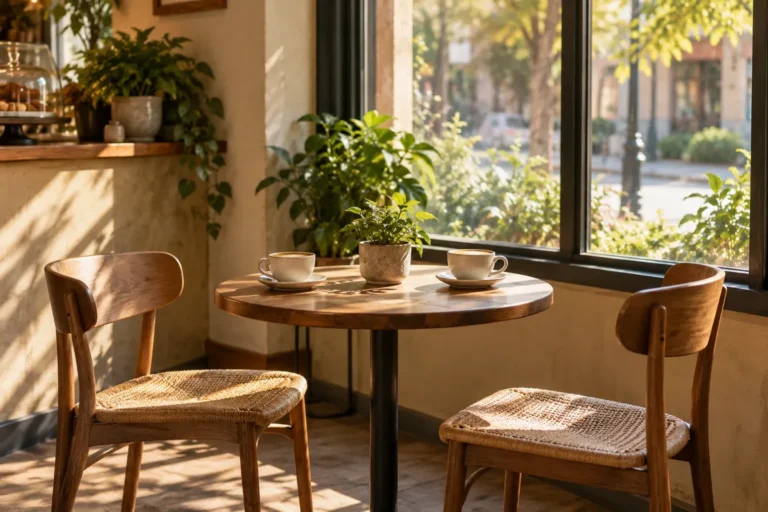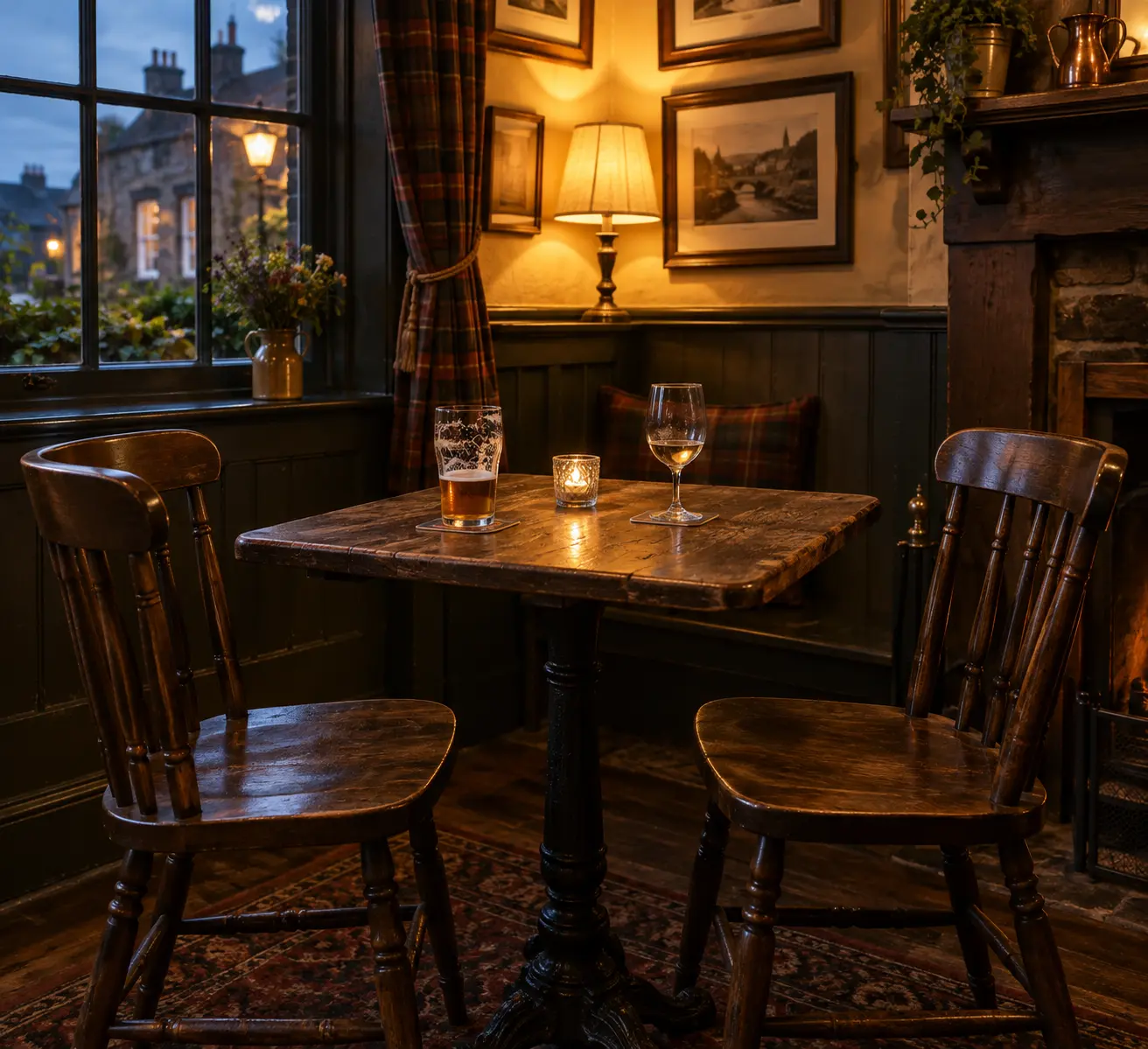
The short answer: the best first date conversation starters are simple, open questions about the other person’s life that invite a story rather than a yes or no. “What’s been the best part of your week?” beats “Do you like your job?” every time. Then the real skill is the follow-up: listen, pick up one detail, share something of your own and ask again. Below you’ll find 60 starters grouped by stage, a worked example of a coffee meetup, the topics to save for later, and a box of swaps for when the person across the table is a new friend rather than a date.
Nerves before meeting someone new are normal, whether it’s a date from an app or a coffee with someone from a club group chat. Having a handful of questions in your back pocket doesn’t make the conversation scripted. It just means the first silence won’t feel like a cliff edge.
How to use these conversation starters
You do not need 60 questions for a one-hour coffee. You need three or four you genuinely want to ask, and the habit of following up. A few principles make almost any starter work:
- Open, not closed. “What got you into climbing?” invites a story. “Do you climb a lot?” invites “yes”.
- Light first, deeper later. Start with the week, the place you’re sitting in, plans and hobbies. Values and big life questions can come once you’re both comfortable, or on a second meetup.
- Ask, listen, share, ask. The follow-up is where conversations come alive. Pick one detail from their answer, react to it, add a bit about yourself, and ask a related question.
- Share as much as you ask. A conversation that’s all questions feels like an interview. Aim for roughly equal airtime.
- Let silences breathe. A pause while someone sips their drink is not a failure. Smile, look around, comment on something you can both see.
Openers: the first five minutes
The first few minutes are about settling in. Keep them easy and grounded in the here and now.
- “How’s your day been so far? Anything good happen?”
- “Did you find this place all right? Have you been here before?”
- “What’s the best thing that’s happened to you this week?”
- “What are you drinking? I always end up ordering the same thing.”
- “Have you come straight from work, or have you had a slow day?”
- “What would you normally be doing at this time on a weekend?”
- “How long have you lived round here? What do you like about the area?”
- “Is this your kind of place, or would you normally pick somewhere different?”
- “What’s keeping you busy at the moment, outside of work?”
- “I nearly got lost on the way here. How was your journey?”
Light and fun questions
Once you’ve settled, these keep things playful. They work best when you answer too.
- “What’s your go-to order at a takeaway?”
- “What’s the last thing you binge-watched? Would you recommend it?”
- “If you had a completely free Saturday with no plans, what would you do?”
- “What’s a small thing that always makes your day better?”
- “What’s the most random skill you have?”
- “Are you a planner on holiday, or do you just wander?”
- “What’s the best gig or concert you’ve ever been to?”
- “Sunday roast, full English or brunch: which would you pick?”
- “What’s a hobby you’ve always wanted to try but haven’t yet?”
- “What’s your unpopular food opinion?”
- “What did you want to be when you were little?”
- “What’s the best thing you’ve bought for under a tenner?”

“Tell me about…” prompts
Prompts that start with “tell me about” are gentle invitations to talk at length. They’re especially useful if the other person is quieter than you.
- “Tell me about where you grew up.”
- “Tell me about the best trip you’ve ever taken.”
- “Tell me about something you’re looking forward to.”
- “Tell me about your friends. What are they like?”
- “Tell me about a job you’ve had that you’d never do again.”
- “Tell me about a book, film or podcast that stuck with you.”
- “Tell me about your perfect day off.”
- “Tell me about something you’ve learnt recently.”
- “Tell me about the last time you laughed until you cried.”
- “Tell me how you ended up doing what you do for work.”
Values-lite questions (for when it’s going well)
These go a little deeper without turning a first meetup into a therapy session. Save them for the second half, when the conversation is flowing.
- “What does a really good weekend look like for you?”
- “What’s something you’re proud of that most people don’t know about?”
- “Who’s someone you really admire, and why?”
- “What’s the best advice anyone’s ever given you?”
- “What’s something you’ve changed your mind about in the last few years?”
- “What are you trying to do more of this year?”
- “Are you close to your family?”
- “What’s a place you’d love to live for a year?”
- “What do your friends come to you for?”
- “What’s something that instantly makes you trust someone?”
Follow-up questions that keep it going
Follow-ups are the secret ingredient. They show you were listening, and they turn a list of questions into an actual conversation. Use them on almost anything the other person says:
- “How did you get into that?”
- “What’s the best part about it?”
- “Wait, how did that happen?”
- “Would you do it again?”
- “What did you make of that?”
- “What’s the story there?”
- “How did that feel at the time?”
- “What would you recommend to someone trying it for the first time?”
- “Is that something you’ve always been into?”
- “What happened next?”
Wrap-up questions for the end of the meetup
As you’re finishing your drinks, these round things off warmly and make it easy to talk about seeing each other again.
- “What’s the rest of your weekend looking like?”
- “Have you got anything fun planned this month?”
- “Any recommendations for things to do round here?”
- “What’s one thing you’d like to try that you haven’t yet: a restaurant, a walk, a class?”
- “Is there a place you keep meaning to go and never have?”
- “What’s the best thing you’ve eaten recently?”
- “If we did this again, would you rather do coffee, a walk or something more active?”
- “This has been really nice. Shall we do it again?”
A worked example: the follow-up technique at a coffee meetup
Here’s how one starter can carry five minutes of easy conversation. Notice the pattern: ask, listen, react, share, ask again.
Sam: So what’s keeping you busy at the moment, outside of work?
Jo: Honestly, I’ve got really into open-water swimming. There’s a group that meets on Sunday mornings.
Sam: No way. In this weather? How did you get into that?
Jo: A friend dragged me along last spring. I hated the first ten seconds and loved everything after.
Sam: That’s how I feel about running in winter. I do a 5k most Saturdays and the first kilometre is always miserable. What’s the best part for you, the swim or the coffee after?
Jo: The coffee, definitely. Everyone’s buzzing afterwards. Do you run with a group?
Sam: Sometimes. I’m better when someone’s expecting me to turn up…
Sam didn’t need a second prepared question. One open starter, a genuine reaction (“No way. In this weather?”), a follow-up, and a bit of sharing kept things moving, and Jo started asking questions back. That’s the point at which a first meetup stops feeling like hard work.
What to talk about on a first date
If you’d rather think in topics than questions, these are the safe, rich areas most first conversations draw on. For 40 topics with an opener and a follow-up each, plus how to steer away from a bad one, see our full guide to what to talk about on a first date.
- The here and now: the venue, the area, your journey, the week you’ve had.
- Interests and hobbies: sport, music, films and series, books, cooking, games, anything they light up about.
- Travel and places: trips taken, trips planned, where you grew up, where you’d like to live.
- Work, lightly: what they do and how they got there, not how much they earn or every detail of their office politics.
- Friends and the people in their life: who they spend time with and what they do together.
- Food and drink: favourite places locally, what they cook, best meals ever.
- Plans and small ambitions: things they want to try this year, classes, trips, projects.
Topics to avoid (or save for later) on a first meetup
There’s no rule against any topic, but a few tend to go better once you know each other:
- Exes in detail. A passing mention is fine; a full history is too much, too soon.
- Money and salaries. Asking what someone earns usually lands badly.
- Heavy politics or religion as a debate. Sharing what matters to you is fine; trying to win an argument is not.
- Your full list of dealbreakers. It can feel like a job interview.
- Very personal health or family trauma. Let that come naturally, later, if it comes at all.
- Your phone. Keep it away unless you’re showing them a photo they asked about.
Same works for a new friend: 10 friend-version swaps
On this site we cover dates, new friends and groups equally, and nearly every question above works for a coffee with a potential friend. A few tweaks make them sound less “date-like”:
| Date version | Friend version |
|---|---|
| “What does a really good weekend look like for you?” | “What do you and your mates usually get up to at weekends?” |
| “What’s something that instantly makes you trust someone?” | “What makes you click with someone as a friend?” |
| “If we did this again, would you rather do coffee, a walk or something more active?” | “Are you up for a pub quiz or a walk some time?” |
| “Tell me about your friends.” | “How did you meet your closest friends?” |
| “What’s a place you’d love to live for a year?” | “Where’s the best day trip from here?” |
| “Are you close to your family?” | “Do you have family nearby, or did you move here?” |
| “This has been really nice. Shall we do it again?” | “This was fun. Want to do it again next week?” |
| “What are you trying to do more of this year?” | “Any groups or clubs you’d recommend round here?” |
| “What’s the best advice anyone’s ever given you?” | “What’s the best thing about living here?” |
| “What’s your perfect day off?” | “What’s your favourite way to spend a Sunday?” |
In a group setting (a dinner table of strangers, a board-game night, a walk with a new club), the light and fun questions work especially well, because they let several people answer in turn and nobody feels put on the spot. For parties, work and neighbours, see our good conversation starters for any situation.

Handling nerves and awkward silences
Most people are at least a bit nervous before meeting someone new. A few things help:
- Pick a setting with built-in things to talk about. A walk, a market, a gallery or a board-game café gives you something to comment on when conversation dips.
- Prepare three questions, not thirty. Choose ones you’re genuinely curious about.
- Say the nerves out loud. “I’m a bit nervous, I don’t do this very often” is disarming and usually met with “Same.”
- Have a natural end time. A coffee or one drink lasts as long as it lasts, and nobody feels trapped.
- Look after the basics. Meeting somewhere public, telling a friend where you’ll be and having your own way home takes a layer of worry off. Our guide to meeting someone from the internet safely has a full checklist.
If a silence does land, use the room: “This place is great, how did you find it?” or go back to something they said earlier: “You mentioned you’d just got back from Galway. How was it?” Returning to an earlier detail is one of the most flattering things you can do in a conversation. For 25 more fixes with example lines, see our guide on how to avoid awkward silence.
Conversation starters to avoid
Some openers tend to fall flat, not because they’re offensive, but because they lead nowhere or put people on the defensive:
- “So, tell me about yourself.” Too broad; most people freeze.
- “Why are you single?” Puts them on the spot.
- “What’s your type?” Turns the meetup into a comparison exercise.
- “What do you earn?” Almost always lands badly.
- “Do you want kids?” A fair question eventually, but heavy for the first hour.
- “You look different from your photos.” Even if you mean it kindly.
Turning a good conversation into a second plan
The easiest way to suggest meeting again is to use something you talked about. If they mentioned a market they’ve never been to, a walk they love or a film they want to see, that’s your next plan: “You said you’d never been to that Sunday market. Fancy going together?” It’s specific, low-pressure and shows you were listening. The same works for a new friend: “You mentioned that pub quiz. Want to make up a team?”
If you’d like to suggest a plan to more than one person, or to meet new people around something you enjoy, a group plan at a public place (dinner, drinks, a game, a concert) is an easy next step. We’re the team behind MeetNow, our own app (see our disclosure and about page).
Want to turn this into an actual plan? MeetNow is a free app for meeting people in person: a host posts a plan at a public place, says who pays (host pays, split, pay your own or free) and picks who joins. It is live on the web now, starting in Malta, with the phone apps on the way: open MeetNow and see the plans near you.
FAQ
What are good first date conversation starters?
Open questions about the other person’s life that invite a story: “What’s been the best part of your week?”, “What got you into that?”, “Tell me about the best trip you’ve ever taken.” Follow up on their answers, and share your own, rather than working through a list.
How do I keep a first date conversation going?
Use the ask, listen, share, ask pattern. Pick up one detail from what they said, react to it, add something about yourself and ask a related question. Returning to something they mentioned earlier is also a great way to restart a lull.
What should you not ask on a first date?
Avoid questions that put people on the spot or feel like an interview: detailed questions about exes, salary, “why are you single?”, and heavy life-plan questions. They’re not off-limits forever, just better saved for later.
How many questions should I prepare for a first meetup?
Three or four you’re genuinely curious about is plenty. The follow-up questions do most of the work, and over-preparing can make the conversation feel scripted.
Do these conversation starters work with new friends too?
Yes. Nearly all of them work for a first coffee with a potential friend or a group meetup. Swap the more romantic-sounding ones for friend versions, such as “How did you meet your closest friends?” or “Are you up for a pub quiz some time?”
What if I get nervous and my mind goes blank?
Say so: “Sorry, my mind’s gone blank, I’m a bit nervous” usually gets a smile. Then use your surroundings or go back to something they said earlier. Choosing a walk or an activity also gives you more to talk about.